Crochet is an accessible and rewarding technique that anyone can learn in a few weeks.If you are thinking about starting this hobby, you need to know the practical steps, the right tools and the modern strategies that facilitate your learning.
The secret to learning crochet quickly is not in innate talent, but in following a logical progression, using updated resources and training with purpose.In this guide, you will discover how to master the basics, choose the ideal material and apply the current learning trends that streamline your development.
The Foundations of Crochet You Need to Master
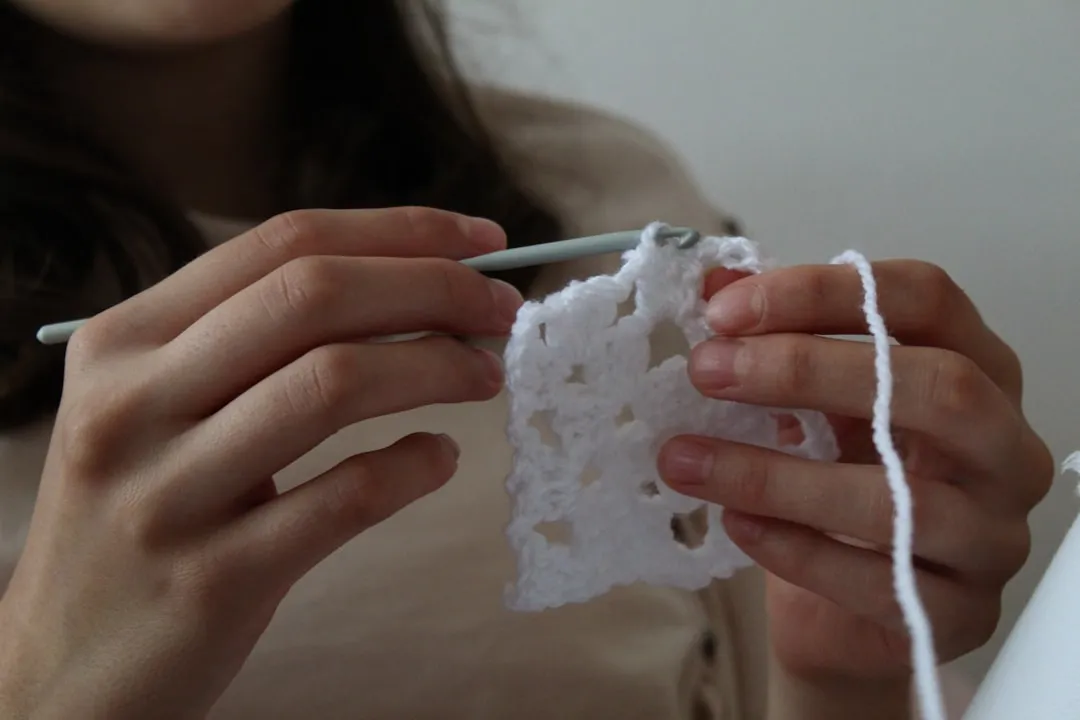
Every person who learns crochet quickly starts from the same basics: pick up the needle correctly, make the initial knot and perform the current point. The current point is the basis for almost all other points, so take time to make it smooth and even. You will notice that after practicing a few minutes a day, your technique improves considerably and the movement becomes natural.
After mastering the chain, you advance to the low point, which is thicker and creates a dense and sturdy weft. This point is critical to create amigurumi (small dolls) and other projects that require firm structure. Then learn the high point, which is more open and creates lighter parts and with better air flow, ideal for shawls and blankets.

YarnPal - Crochê p/ iniciantes
PIXELCELL PTE. LIMITED
The combination of these three points (current, low and high point) allows you to create dozens of different projects. Do not try to learn all the points at once; this causes frustration and discouragement. Instead, choose one point per week and practice it repeatedly until you gain speed and consistency naturally.
Choosing the Right Tools and Materials
The quality of your needles and the thread directly impacts the speed of your learning. Needles that are too thin or too thick will damage your posture and cause hand fatigue, slowing progress.Start with a medium-sized needle (such as 5 or 6 mm) and a medium-thickness thread (yarn weight 4), as these offer better visibility of the points and greater comfort during the first hours of practice.
The material of the yarn also matters: avoid very dark yarns in the first projects, as it is difficult to see the dots and identify errors. Choose colors such as light yellow, pastel pink or white, which make it easy to visualize each turn and structure. Pure cotton yarns are ideal for beginners because they do not slip as easily as cheaper acrylic yarns, and offer better control.
Invest in a good quality metal or bamboo needle: they last for years and provide better wire slip. Avoid very cheap plastic needles, which break easily and harm your experience. A simple stitch marker (even a small piece of colored wool will do) is essential to track the beginning of each turn and avoid confusion in the middle of the job.
Modern Strategies to Accelerate Your Learning
Current online learning trends have transformed the way people master crochet quickly.Specialized platforms offer segmented videos that show each movement at multiple angles, allowing you to pause and replicate exactly what you see.
The modern learning approach emphasizes deliberate practice: instead of attending long classes passively, you practice a single point for 15 to 30 minutes daily and see tangible results in days. Online crochet communities allow you to share your first attempts, receive constructive feedback, and stay motivated by seeing the progress of other beginner people.
Visual patterns and crochet diagrams gain popularity because they are universal and independent of language. Learning to read these diagrams is just as important as knowing the dots themselves, as any pattern in the world is accessible to you. Start with patterns that use only current and low point; then gradually evolve to more complex structures when you feel comfortable.
Initial Projects That Ensure Fast Success
The best project to start with is something simple that you finish in one or two sessions, generating immediate sense of accomplishment. Long rectangular scarves are perfect because they require only repeated current and high point, without the need for increases, decreases or color changes.In a few hours of practice, you will have a functional piece that you can use or gift.
After the scarves, small amigurumi (simple dolls such as spheres or cubes) offer controlled challenge and teach techniques of increase and decrease in a practical way. Rectangular pillows and blankets also work well because they allow to practice consistency of size and tension without structural complexity. Avoid projects with multiple colors or advanced points in the first months, as this diverts the focus from the fundamental techniques.
As your confidence grows, choose projects that require intermediate points one at a time. A simple coat with high point is the natural next step, as it teaches increases and size adjustments while maintaining simplicity.Each completed project reinforces your technique and mentally prepares you for bigger challenges without frustration.
Structured Training versus Free Practice
There are two approaches to learning crochet quickly: structured (following a systematic course) and exploratory (practicing freely). The structured approach offers clear progression, corrective feedback and full coverage of techniques; however, it may seem monotonous to creative people. Free practice is motivating because you work on projects you want; however, you can create knowledge holes that hinder future projects.
Ideally, combine both: follow a structured course to cover fundamentals in four to six weeks, then use that knowledge in free projects that genuinely interest you. This hybridization ensures solid foundation while maintaining enthusiasm when creating items you love.Dedicate 30 to 60 minutes daily to structured practice in the first 30 days, then scale up to larger projects as you feel prepared.
Overcoming Common Challenges in Learning
Beginners face inconsistent tension, where some stitches get tight and others loose. This is absolutely normal and improves with consistent practice; your body needs to learn the automatic rhythm of loosening and pulling the thread. Film yourself practicing or seek feedback from more experienced crochet artists to identify whether you are holding the needle too tightly or applying uneven tension on the thread.
Another common challenge is to accidentally drop points in the middle of the job, resulting in compromised structure. Mark each turn with a colored wire or use trade point markers to avoid losing count.If you discover an error a few points back, learn to dismantle only the required amount and redo, instead of throwing the entire piece away.
Hand or wrist pain indicates incorrect technique or excess muscle tension. Take frequent breaks during the first few weeks, stretch your fingers and wrists, and consider using a support if necessary. Adjust your posture: the needle should be at a comfortable angle, not perpendicular to your body. If pain persists after postural adjustments, reduce the daily practice time until your body adapts.
Current Trends Transforming Crochet Learning
The global crochet community has experienced significant transformation in recent years, especially as to teaching methodologies.Specialized content creators fragment learning into 5 to 10-minute micro-lessons focused on a single aspect, allowing you to assimilate information without cognitive overload.This trend of small-part education (microlearning) has proven to be more effective for knowledge retention and continuous motivation.
Online collaborative communities have grown exponentially, offering emotional and practical support that traditional books have never provided. You meet people at their exact skill level, share doubts, receive encouragement and see collective progress.
Interactive applications specializing in crochet bring scanned patterns, automatic point counters and even augmented reality to visualize how a project will look before it starts. These tools reduce frustrations caused by misinterpreted patterns and allow digital experimentation of colors and sizes. Although these applications are third-party and not mandatory, they represent the modern evolution of how people learn traditional practices.
Sustainability and reusing yarns also influence how beginners choose their first projects. The trend of "upcycling" 'reusing yarn from old parts 'SAV saves resources and offers a variety of materials to practice. This ecological approach turns learning into a more meaningful activity, connecting manual skill with environmental responsibility.
Daily Routine for Consistent Progress
Establish a simple but consistent routine: dedicate 45 minutes daily to crochet at the same time, preferably when your mind is clear and concentrated. The first 15 minutes should review the point you are currently mastering, creating a practice string of at least 1 meter. The next 20 minutes apply the point in a real project you want to complete. The last 10 minutes consist of studying the next point through videos or images, without practicing yet.
Keep a progress diary: photograph your daily practice and note what points you practiced, for how long and which project you were developing. This visual record motivates you because you clearly see the improvement from week to week. In addition, when reviewing the diary, you identify which points you need to reinforce before moving on to bigger challenges.
Incorporate crochet into your day naturally: take your project to watch television, have friends and family test your pieces, and share results on social networks to maintain motivation. This social integration makes learning less lonely and creates natural responsibility to maintain daily consistency.
Learning crochet quickly is completely feasible when you combine solid fundamentals, appropriate materials, consistent practice and modern learning approaches.Your progress will depend less on innate talent and more on dedication to the first 30 to 60 days, a period where the neurological and motor foundations of crochet solidify.Start today, choose a simple project, and observe how weeks of practice turn you into a person capable of creating beautiful and functional pieces with just a needle and a thread.