
Do you want to start a career as an electrician or improve your professional skills? A course for electrician is the most direct way to learn essential techniques, safety standards and gain credibility in the market.This complete guide shows you how to choose, study and make the most of your training.
The demand for qualified electricians is constantly growing, and investing in professional education differentiates you from competitors.You will learn from basic electricity concepts to complex facilities, ensuring technical competence and safety in each project you undertake.
What You Learn in an Electrician Course
A course for structured electrician offers knowledge that covers all the theoretical and practical basis necessary to work in the sector. You will understand electrical circuits, voltage, current, resistance and how these concepts apply in real installations of homes, businesses and industries. The subject includes reading electrical schemes, identification of components and understanding of technical standards such as ABNT NBR 5410, which regulates low voltage installations.
Practical techniques occupy an important part of the curriculum, allowing you to work with professional tools, cables, connectors and circuit breakers in controlled environments before facing real situations.You learn to install outlets, switches, distribution panels and complete circuits safely and accurately.In addition, modern courses address energy efficiency, solar exploitation and technological trends that add value to your professional portfolio.
Safety is a cross-cutting theme in any quality course, as electricity requires respect and extreme care. You study personal protection, accident prevention procedures, first aid and regulatory standards that ensure your integrity and that of your customers. This knowledge is non-negotiable and differentiates responsible professionals from improvised amateurs.
Types of Electrician Courses Available in Brazil
You will find varied training options, from short technical courses to integrated courses to high school. The free courses, with a workload between 40 and 200 hours, focus on specific contents such as residential installation, preventive maintenance or solar panels, offering flexibility of schedules and quick completion. This modality is ideal if you seek specialization in a particular area or have a restricted schedule.
Professional technical courses, offered by technical schools and SENAI, require between 800 and 1,200 hours of study and practice, generating certification recognized throughout the country. You dive deeply into residential, commercial and industrial electricity, with equipped laboratories, experienced teachers and networking with companies in the sector. Many employers prefer contractors with this training, as it guarantees comprehensive and proven knowledge.
Post-technical courses or specialization complement your initial training with advanced topics such as installation of photovoltaic panels, home automation systems, new technical standards or entrepreneurship.If you already work as an electrician and want to evolve professionally or open your own business, these modalities offer practical and updated tools. Choosing the right type depends on your goals, availability and previous experience.
How to Choose the Best Course for Your Situation
Before enrolling, evaluate your current situation and clear objectives. Are you an absolute beginner, technician seeking specialization or professional who needs to update knowledge?Your goal is to work as a freelancer, find a job in a company or open your own activity? These answers guide you to courses with different emphases. A beginner needs a comprehensive course that covers fundamentals, while an experienced professional can focus on a specific niche such as solar energy.
Check the credibility of the institution offering the course for electrician, consulting references, graduate evaluations and recognition with the market. Schools such as SENAI, SESI and state technical institutions have a consolidated reputation and updated curriculum as industry demands. You can search evaluations online platforms, talk to professionals who have studied there and question coordinators about faculty, infrastructure and graduate placement.
Consider practical aspects such as schedules, location, cost and possibility of face-to-face or semi-face classes. A course that fits into your routine increases the chances of completion with enjoyment. You should also check if the course offers supervised internship, as practical experience is decisive to start career with confidence. Quality institutions include practices from an early age, using laboratories with real facilities and simulators that replicate situations of professional daily life.
Structure and Schedule of a Typical Electrician Course
A structured technical course for electrician is organized in thematic modules that gradually progress in complexity. You start with fundamentals of electricity, studying theory of electrical charges, simple circuits and fundamental laws such as Ohm and Joule, associating abstract concepts with practical examples of everyday life. This solid foundation allows you to understand the why of techniques, not just how to do, reinforcing retention and adaptation to new situations.
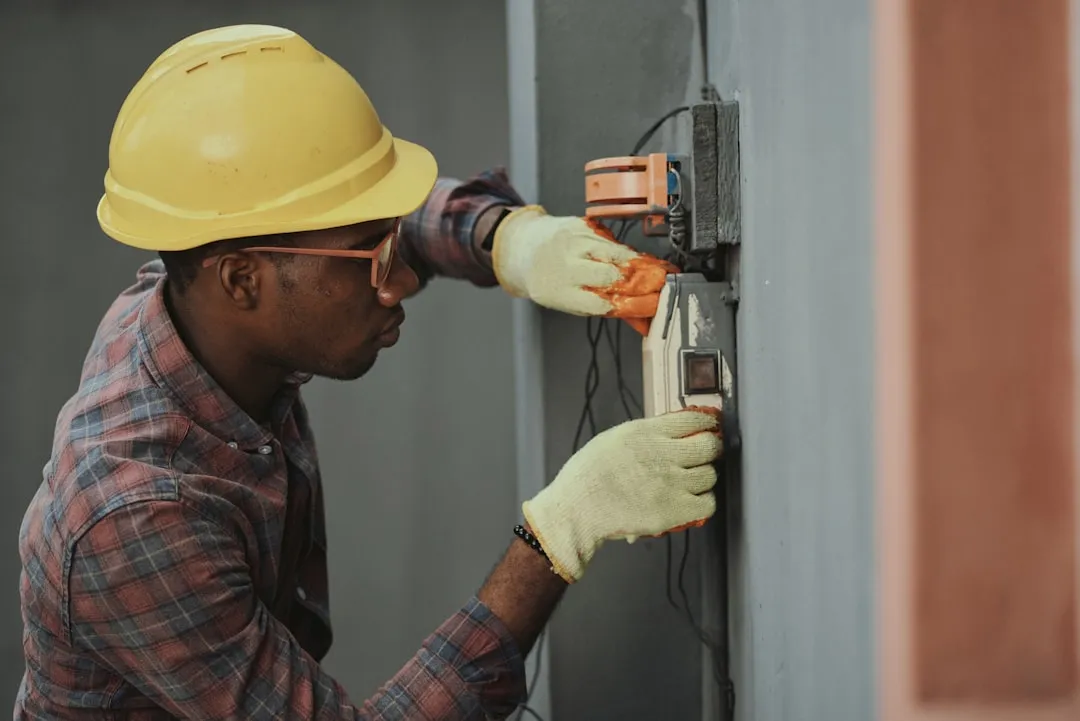
Then you move on to residential facilities, working with project diagrams, circuit sizing, conductor choice, overload and short circuit protection, and compliance with technical standards.You learn to plan the wiring of a room, an entire house, solving real challenges such as cable passage on walls, integration with panels and compliance with safety code. Practical exercises in didactic benches solidify manual skill and technical understanding simultaneously.
Following modules address commercial and industrial electricity, with higher voltages, specific protections, electric motors and three-phase systems. You discover differences between store, factory and condominium installation, adapting previous knowledge to more complex contexts. Maintenance and fault diagnosis take up important space, preparing you to identify problems, test components with multimeter and solve unexpected situations that arise in the field.
In the latest modules, quality courses include emerging topics such as energy efficiency, photovoltaic systems, home automation and updated legislation. You can also develop an integrative practical project, demonstrating accumulated competence and receiving improvement-oriented feedback.This typical schedule extends over 12 to 18 months, allowing gradual absorption and continuous reinforcement through reviews and applications in varied contexts.
Real Benefits of Taking an Electrician Course
When you complete a course for electricians in a respected institution, it significantly increases your employability and income potential. Construction companies, maintenance companies, energy utilities and developers hire professionals certified as a priority, recognizing that structured courses reduce risks of accidents and rework. You enter the market with proven credibility, allowing you to negotiate better wages from the first day of work. According to market data, electricians with technical training earn between 30% and 50% more than professionals without certification.
Personal and customer safety improves radically with proper training.You learn to identify risk, use protective equipment correctly and follow procedures that prevent serious accidents. Electricity kills and causes permanent disability, so technical knowledge is a matter of professional survival. By mastering safety, you work with peace of mind, convey confidence and reduce exposure to litigation for damages caused to third parties, protecting your assets and reputation.
Professional autonomy thrives when you master proven techniques and maintain up-to-date knowledge.You can work as a freelancer, offer differentiated services, specialize in lucrative niches such as solar energy, rural property electrification or critical facility maintenance. Customers recognize competence and pay premium for quality, allowing you to build loyal clientele and predictable income. Certified professional who offers job assurance and solves complex problems attracts constant demand.
Career development is accelerated when you have solid foundation.You can advance to supervision, project coordination, technical education or consulting, opening doors that simply do not exist for amateurs.Some companies finance specialization courses for promising technicians, allowing continuous growth.Your certificate is portable, recognized in any state of Brazil and even internationally in many cases, offering professional mobility that expands opportunities indefinitely.
Practical Step by Step to Choose and Start Your Course
First step is to define which type of course meets your reality. You need to decide between short-term free course, full technician or specialization, considering your availability of time and budget. Beginner technician without previous experience should privilege technical courses that cover fundamentals comprehensively. Professional with informal experience can opt for full technician to formalize knowledge or specialization to add specific value. Use internet to list credible options in your region or, if you prefer, look for semi-presential or online modalities that offer more flexibility.
Second, research specific institutions in deep detail before committing time and money. Visit websites, talk to coordinators, ask for alumni references if possible, consult reputation in professional networks and assess whether the infrastructure offered (laboratories, materials, faculty) justifies the investment. You can request information on graduate employability rate, partnerships with companies and data on starting salaries to base decision on numbers, not just promises. SENAI and state education secretariats often offer courses with affordable prices and guaranteed quality.
Third, organize your finances and schedule before enrollment. Technical courses require regular attendance, dedication to studies and materials, so plan ahead how you will fund the training. Scholarships, funding and government programs exist for professionals in career transition. You should also set aside time to study outside of class, solve practical exercises and consolidate learning through review and repeated practice.Successful professionals treat the course as work, always attending, delivering assignments on time and requesting help when they do not understand something.
Fourth, during the course, actively engage in theoretical and practical classes, take careful notes, question your instructors and seek constant feedback.You learn electricity by doing, laboratory errors are expected and valuable because they reveal misunderstood concepts. Join group activities, work in practical project teams and build a network of colleagues that will remain professional after graduation. Many friendships and professional partnerships are born in the classroom, generating future opportunities for joint work.
Fifth, after completion, invest in continuity. You must maintain up-to-date certification, keeping up with changes in technical standards, new technologies and legislation. Many institutions offer short and affordable recycling courses that keep you aligned with the market. Consider specializing in areas that the market pays well, such as solar panels, which grow explosively in Brazil. Your initial training is beginning, not end of learning, and professionals who continually evolve earn more and enjoy longer and more satisfying careers.