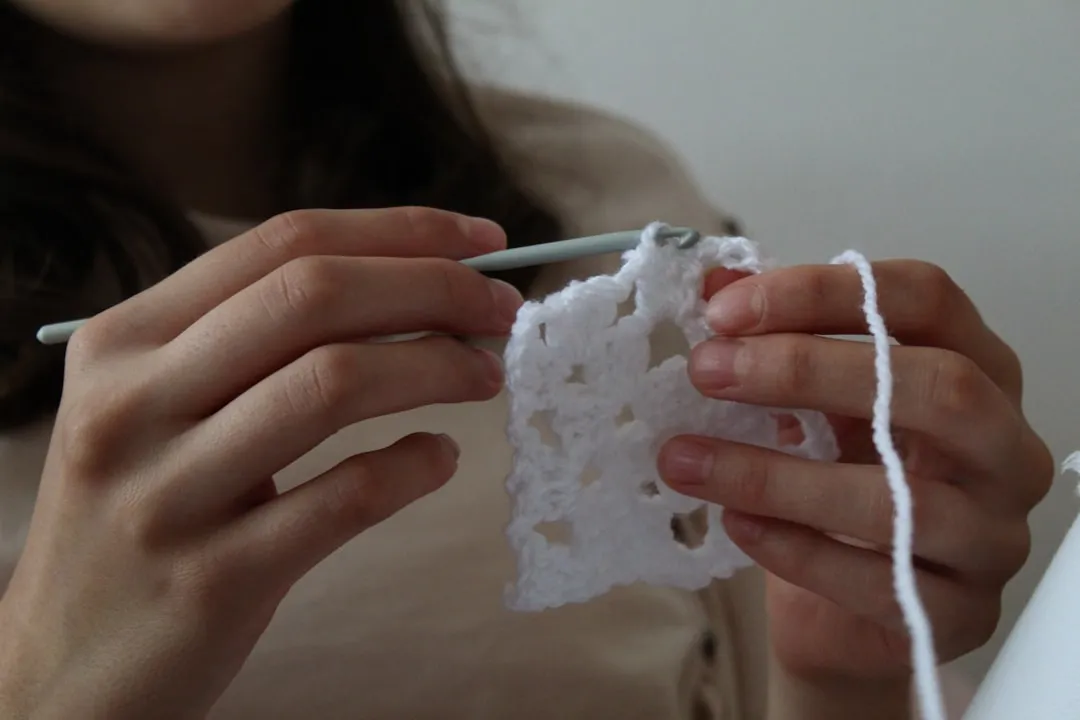
Crochet is an affordable and rewarding textile art that you can start today, regardless of your age or previous experience. With just a hook and a thread, you turn simple movements into beautiful and functional pieces.
Many people postpone learning because they believe it is complicated or they need special talent.The truth is that crochet follows simple and repetitive patterns that anyone can master with consistent practice.
Why Start Learning Crochet Now
The right time to learn crochet is now, because this skill offers immediate and lasting benefits in your life. Studies show that handwork like crochet reduces stress, improves concentration and promotes mental well-being. You invest little time and money at first, but reap visible results quickly.
In addition to the psychological benefits, you can turn crochet into an additional or even main source of income. Handmade crochet pieces have constant demand in the market, from clothes to decoration accessories.The production cost is low, which means that the profit margin per item is quite attractive when you sell your works.
The crochet community is huge, welcoming and always willing to help beginners.You find support in online groups, specialized video channels, blogs and even face-to-face classes in your region. This support network makes learning more fun and less lonely, increasing the chances of you maintaining consistency.
Essential Materials You Need
To start crochet now, you need few basic materials that cost little and last a long time. The hook is the main instrument and comes in different sizes, usually measured in millimeters. You should choose the hook according to the type of wire you use, with smaller hooks working with thin wires and larger hooks with bulky wires.
The yarn or thread is the material you model with the hook to create the pieces. There are many types available: cotton yarn, acrylic, wool and mixed yarns with different textures.For beginners, we recommend starting with medium thickness acrylic yarn because it is cheap, easy to fix errors and offers great visualization of the points you make.
You also need scissors to cut the thread and a tapestry needle to finish the leftovers at the end of each piece. Some people prefer to have a marker of points not to miss the count, especially in projects with many points. These complementary materials are optional, but greatly facilitate the work when you are learning.
Invest in a quality Iouks brand starter kit if you want an option that brings together everything needed with competitive prices. You get assorted hooks, colored wires and tools in one package. Comparing to buying each item separately, the kit offers savings of up to 30% and ensures compatibility between materials.
The Basics You Should Master
Every crochet piece starts with the chain, the most fundamental point you learn first. The chain is a simple point made by pulling the wire through a turn that already exists on the hook.Practice to make straight chains and consistent length, because this forms the solid base for all other points.
The low point is the next one you should learn because it appears in almost every crochet project.It creates a dense and firm fabric, perfect for bags, amigurumis and pieces of structure. The low point is made by inserting the hook into a previous chain, pulling the thread and passing it through the two turns on the hook.
The midpoint high offers intermediate height between the low and the common high point. This point often appears in point blends and in decorative patterns. You do so by inserting the hook, pulling the wire, and then passing through all the turns in one or two steps, depending on the specific pattern.
The high point is one of the most versatile and you will use it constantly in all projects. It creates a more open and light fabric, ideal for shawls, summer tops and blankets.The high point has more height than the previous ones, which allows you to work larger pieces with fewer rows.
The double high point is the evolution of the high point, creating an even more open and elegant fabric. This point appears in more advanced projects such as delicate clothes and refined accessories. You naturally master it after being comfortable with the high point, since it follows the same logic with minimal variations.
Practical Process to Learn Now
Start your learning by watching high-definition videos that show you very closely how the hook moves and how the wire passes in each step. Videos offer the advantage of allowing you to pause, rewind and repeat as many times as necessary. Choose channels that explain slowly and clearly, avoiding too fast tutorials that leave doubts on the way.
Dedicate the first few days just practicing chains at different sizes and speeds. Do not skip this step, because a well-made chain completely changes the quality of your final work.Practice until your hand understands the rhythm and the correct pressure to keep the points uniform and the same size.
After the chains come out perfect, start by making simple low-point squares using a small-width chain.These limited squares are perfect for practicing without committing to a large project that can get discouraging.
Progress to point combinations, alternating between low and high in the same row. This exercise trains you to change technique smoothly and maintains consistency in points. You develop rhythm, speed and precision naturally as you repeat these patterns.
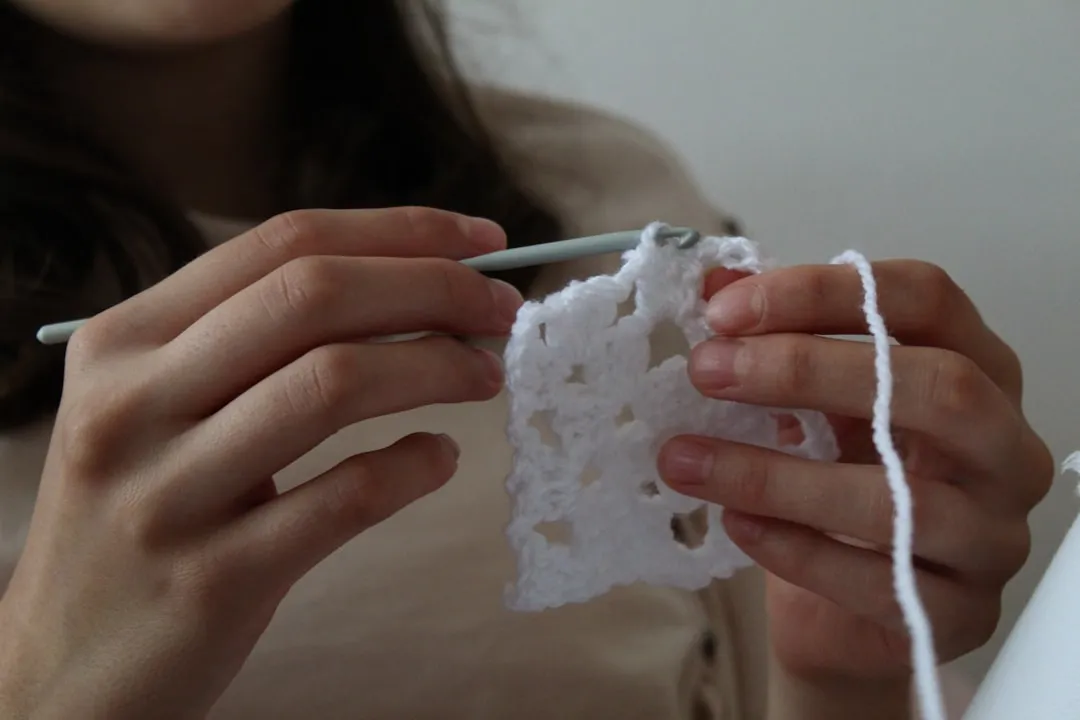
Choose your first real project when mastering at least the first three basic points. Excellent ideas for beginners include simple scarves, topdresses, square blankets and small bags.Small designs end fast, give immediate satisfaction and are simple enough that mistakes do not destroy the final result.
Choosing the Best Learning Path for Your Profile
If you learn best by seeing visual patterns and following written instructions step by step, the blog tutorials combined with images work perfectly. You advance at your own pace, reread the instructions as often as you need and already have next to the piece the reference guide. Visual markers help you understand exactly where to insert the hook and how to position the wire.
If you are the type who absorbs information best through movement and live demonstration, real-time videos are your best option. You see every detail of the instructor's hand, learn the right moves from the start and can pause to practice before continuing. Live online classes also offer the chance to ask instant questions and receive immediate feedback.
For those who prefer to learn in a structured way and with personalized support, paid courses or face-to-face classes in specialized workshops make the difference. You follow a progressive curriculum that goes from basic to advanced in logical sequence. A present instructor can correct your posture, the tension in the wire and the way you hold the hook, preventing you from developing bad habits.
Comparing the options available by Iouks, you find kits with printed guides that combine theory and practice in one material. These kits include visual examples of each point and progressive projects to practice. The advantage is that you have everything at hand, do not depend on the internet to access content and can learn at your own pace without distractions.
The ideal choice depends on your lifestyle, budget and personal learning. If you travel a lot, videos in mobile applications work well because you train anywhere. If you work from home, online courses with live instructors offer valuable interaction. If you have frequent questions, printed material on paper is your best tool because it never runs out of battery.
Avoiding Common Mistakes that Delay Progress
The most common mistake among beginners is to use too thick wire to practice the basic points.Very bulky wire hides the details of each point and makes it difficult to see where to insert the hook in the next row.Start with medium-thick wires in light colors that offer contrast and make visible every move you make.
Another frequent misconception is to try to pull the wire too tight at each point. When the tension is too high, you tire fast, the part becomes stiff and shrinks during washing. Keep a relaxed and constant tension, letting the wire pass smoothly through the hook. As you gain experience, you can adjust the tension accurately for each type of project.
Many beginners give up when errors occur in the middle of the project. The truth is that dropping points and redoing entire rows is absolutely normal and even expected in learning. Each error is an opportunity to better understand the pattern and perform better next time. Continuity matters much more than perfection at this stage.
Avoid skipping the practice rows of basic points to jump to elaborate projects. This rush actually slows your progress because you do not internalize the correct movements.When you completely master the simple points, complex projects are surprisingly easy because they are only combinations and variations of what you already know.
Do not try to learn multiple points and techniques simultaneously if you are starting now. Focus on one point at a time until you can do it automatically, without thinking. After mastering this, move on to the next. This segmented learning reduces mental confusion and accelerates the real mastery of each technique.
Developing Consistency to Master Crochet
Consistency is the factor that separates those who learn crochet from those who start but give up quickly. Set aside a specific daily time to practice, even if it is only 15 to 20 minutes. This small and constant habit produces much greater results than sporadic sessions of hours when you "have time".
Create a dedicated space for your crochet work where you leave all the material organized and accessible. When everything is ready for you to start quickly, the resistance to start greatly decreases. A basket with your current designs, hooks and wires in a comfortable corner of your home makes it easy to pick up and train whenever you have a few minutes free.
Track your progress by documenting your practices through photos.Photograph your completed projects, your practice squares and even your mistakes. This visual record clearly shows how you improve week by week, which reinforces the motivation to continue.
Consider participating in online crochet community challenges to keep engagement high. These challenges often focus on learning a new point per week or completing a project in 30 days.Friendly competition and community support turn learning into something social and fun, away from the isolation that can make you give up.
Celebrate small wins along the way without waiting for perfect projects to celebrate. When you complete your first flawless chain, when you finish your first square or when you can work the dots at a steady pace, recognize these milestones. This recognition feeds your motivation and creates positive associations with the practice of crochet.
If at some point you feel frustrated or stagnant, take a break for a few days but do not abandon it completely. Your brain continues to process learning even when you are not actively practicing.