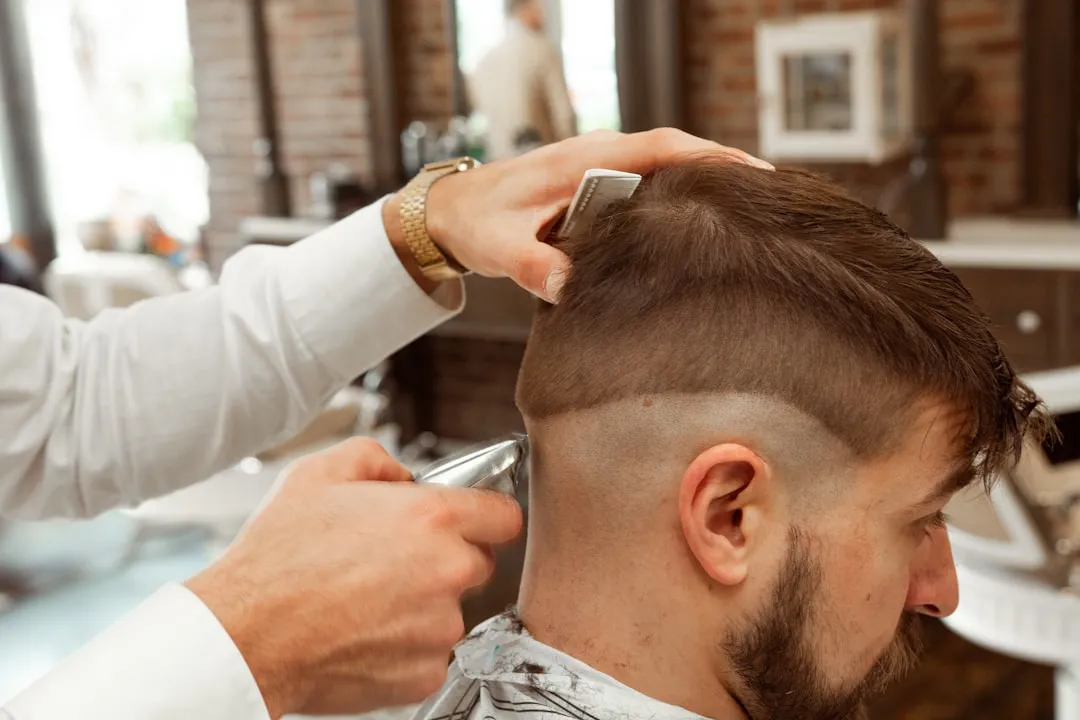
Artificial intelligence has revolutionized the way people experience visual changes. Today, you can visualize any haircut in seconds, without having to sit in the hairdresser's chair or risk a hasty transformation.
AI tools for haircut visualization have become a global trend that goes far beyond a simple photo filter.This innovation combines computer vision, image processing and machine learning to create accurate and realistic simulations of how you would look with different styles.The technology is available on mobile apps, beauty salon websites and specialized hair care platforms, offering users an immersive and safe experience before any definitive commitment.
How AI Technology for Hair Cuts Works
The technology that allows you to visualize a new cut in seconds uses advanced facial detection and image segmentation algorithms.The system starts by capturing a front or side photo of your face, then identifies the key points of your facial structure, including face shape, ear position, forehead line and chin contours.
After mapping your physiognomy, AI applies the selected haircut intelligently, considering unique features like your hair texture, estimated hair density and the specific proportions of your face. The algorithm not only overlaps the image of the cut in your photo, but actually adapts the style to your individual characteristics, taking into account how the hair would naturally fall on your head. This process happens in a few seconds, allowing you to experiment with multiple styles in sequence without waiting for long processing.
The accuracy of this technology has improved exponentially over the past two years thanks to training on millions of photos of real cuts.Convolutional neural networks analyze patterns in massive data, learning how different cuts behave in various hair types, face shapes and textures.When you use the tool, you are benefiting from accumulated collective learning from countless images, making predictions increasingly reliable and realistic for your specific situation.
Current Trends in Virtual Cuts View
Augmented reality has emerged as the dominant trend in 2024 for hair visualization tools, allowing you to see the cut in real time while moving your phone's camera. Unlike still images, this approach offers 360-degree perspectives of your new look, showing how the cut would look from different angles and under different illuminations.This functionality has become standard in premium beauty apps, as it offers a much more immersive and compelling experience than simple photo simulations.
Another significant trend is the integration of generative artificial intelligence into the virtual cutting tools. In addition to viewing existing styles from the platform database, you can now describe the desired cut or make precise adjustments to the generated images, allowing extreme customizations.Some platforms allow you to combine elements of different cuts, adjust the length up to the millimeter, or even change the hair color simultaneously to visualize the full look.This evolution has transformed the tools from simple experimenters to creative personal style assistants.
Data-driven personalization has also gained significant momentum, with platforms analyzing which cut most favored you over your face shape. Intelligent tools use facial feature mapping to recommend styles that harmonize with your specific proportions, forehead height, and jaw width.This recommended AI approach combines aesthetics and science, offering suggestions that you might not have considered, but that work brilliantly with your natural features.
Practical Benefits for You as a User
Haircuts are permanent or semi-permanent decisions that take weeks or months to grow again if it doesn't work well. With AI visualization, you eliminate this uncertainty by testing dozens of options before going to the salon, significantly increasing the chances of being satisfied with the end result.
You also save time and money when using these tools before committing to a cut. Instead of multiple consultations with different hairdressers or failed attempts that require costly corrections, you arrive at the salon with a clear and realistic view of what you want. This facilitates communication with the professional, reduces the time required to explain your preferences and minimizes requests for post-cut adjustments. Many salons now integrate these technologies into their practices, using the results generated as a visual reference during the cutting process.
Accessibility is another transformative point of this technology.People with social anxiety, mobility problems or who live in regions without specialized hairdressers can explore options independently and safely.You do not have to go to a salon to have an initial exploratory experience, democratizing access to professional cut design. Teens and young adults can experiment with bolder styles virtually before deciding whether they really want to take a risk, empowered with concrete visual information.
The Best Available Platforms and Apps
Several platforms have established themselves as leaders in the virtual visualization of cuts market, offering distinct experiences according to their needs. Some applications focus on technical precision, with extensive databases of cuts cataloged by hair type, length and complexity. You can search for specific trends, filter by decade (to find retro looks, for example), or browse for cured recommendations. These platforms often include tips on how to keep the cut, recommended products and even tutorial videos to style at home.
Other platforms emphasize immersive augmented reality, allowing you to see the cut in motion and under different light conditions. These tools capture nuances such as how hair moves when you turn your head or pass your hand, offering a much more realistic preview of the experience of having that cut on a day-to-day basis. You can also share the view with friends or family through links or videos, getting feedback before committing to the change. The quality of the AR experience depends on your device, but even on older phones, the simulations remain relatively accurate.

Social networks specializing in beauty integrate these technologies natively, allowing you to view cuts while exploring the content of influencers and professional stylists.You can see a cut that you liked in an AI video and test it on your photo in real time, then save as a visual reference. Many of these platforms connect you directly with professionals who offer services, creating a complete ecosystem of discovery, visualization and execution of new styles.
Limitations and Important Considerations
Although revolutionary, AI visualization technology still has limitations that you must understand before you fully rely on the predictions.The accuracy of the simulations strongly depends on the quality of the initial photo, lighting, camera angle and how the hair is combed at the time of capture. If you photograph your hair in inappropriate conditions, the AI can process inaccurate information, resulting in visualizations that do not fully reflect the actual result. You always get better results when using well-lit photos, with the hair in its natural form and with the face well visible.
The texture and actual behavior of the hair also escape the perfect prediction of artificial intelligence. If you have curly, curly or natural volume hair, the simulation may not completely capture how a specific cut would behave with all its texture and natural movement. Very thin or very thick hair also present challenges, as AI can overestimate or underestimate the final volume of the cut. These are factors that an experienced hairdresser intuitively considers, but which still require practical AI experience to predict perfectly.
Another important aspect is that hair color and coloring impact how a cut is perceived visually, something that AI has difficulty replicating to perfection. A cut can look completely different on blonde, brown or black hair due to the way the light reflects on the different colors. If you plan to change the color in addition to cutting, consider experiencing both changes virtually when possible, or clearly communicate these intentions to your hairdresser.Visualization is a powerful tool, but its best result comes when used in combination with the professional advice of a qualified specialist.
Practical Guide to Using These Tools Effectively
Start by selecting a reliable application or platform that offers augmented reality technology or high-quality simulation. Read user reviews that share your results, checking if the simulation matches the actual cut they performed. Different apps work best for different hair types, so you may need to test a few before finding the one that offers more accurate predictions for your specific texture.Do not cling to the first result; exploration is part of the process.
When shooting for simulation, choose a place with natural or well-lit lighting, avoid shadows on your face and hair, and comb your hair similarly to how you normally style it. Take multiple photos from different angles, as sometimes a perfect front angle can give different results from a side photo.If the app offers old or new photo option, choose "new" to ensure that AI processes the current image of your hair. These small details significantly amplify the accuracy of predictions.
Systematically explore different styles, starting with similar cuts to what you already have and gradually experiencing more radical changes. Save your favorite simulations by taking screenshots or using the app's favorites function, so you can revisit them later and compare them. This comparison is valuable because you will see which cut continues to appeal to you after a few days, indicating a genuine preference versus a momentary attraction. Talk to trusted people about your favorite simulations, getting outside perspectives that can reveal how the cut would work socially or professionally.
Take your favorite visualizations to the hairdresser as a visual reference, explaining what the AI was used to create the simulation. Experienced hairdressers understand the limitations of these tools and can realistically adjust expectations, preparing you for minor differences that may occur due to the texture and actual behavior of your hair. This clear communication based on concrete visualization significantly reduces the mismatches between expectation and reality, making the experience much more satisfying for both.
The Future of Personal Beauty and Cuts Visualization
The next generation of AI tools for beauty promises to integrate even more sophisticated biometric data analysis, considering factors such as your genetic history, hair loss patterns and even historical aesthetic preferences based on past choices.You will be able to receive recommendations not only for the shape of your face, but also for compatibility with your wardrobe, skin tone and overall personal style. These personalized recommendations will make it easier to find exactly the cut that works for your full life, not just your head in isolation.
Augmented reality will continue to evolve into even more immersive experiences, possibly allowing you to see cuts in different environments, under various types of lighting, on the move, and even in simulated social contexts.You could see how the cut would behave in a work meeting, at a party, or during sports activities. This contextualization would offer a much deeper understanding of how the new look would affect your practical life.Read-time 3D rendering technologies will make these experiences indistinguishable from reality.
Integration with beauty e-commerce will also accelerate, allowing you to purchase hair care products specifically recommended to keep your new cut directly through the same platform. You would view the cut, receive recommendations for similar cuts from nearby salons with prices, and purchase the products needed for styling and maintenance, all in a unique ecosystem.This convergence of visualization, recommendation, execution and maintenance will represent the future complete AI-centric personal beauty experience.
Technology will also expand to other aspects of beauty beyond cuts, allowing you to visualize dyes, perms, and even minor aesthetic procedures with increased accuracy.A person could completely visualize a multifaceted beauty transformation before starting any procedure, gaining full confidence about their decision.This democratization of safe experimentation in personal beauty will continue to reduce anxiety, increase satisfaction, and allow you to truly control your own visual narrative and self-expression.