Artificial intelligence has finally arrived in beauty salons.Today you can find out what is the best haircut for your face by taking just one photo and letting the AI do the analysis.
But does this technology really work? There are many myths circulating on the internet about how AI selects haircuts, and it is important to separate science fiction from practical reality.This article will unravel the main misconceptions and show exactly how this technology works in your day to day.
The Great Myth: AI Hit 100% of the Time
Many people believe that artificial intelligence is practically infallible when it comes to recommending haircuts.The reality is quite different: no algorithm, no matter how advanced, can predict with 100% accuracy which cut will look perfect on you. AI works with probabilities and patterns, not with absolute certainties.
The actual operation is based on analysis of facial features that the machine identifies in your photo. The software examines the shape of your face, the width of your forehead, the prominence of the chin and other geometric details. With this information, the algorithm compares your data with a database of thousands of images and recommends cuts that have historically worked well on faces similar to yours. This means that the suggestion is intelligent, but not an exact science.
What often disappoints users is the unrealistic expectation.You see the recommendation of AI, imagine how it will look perfect, and then reality does not exactly match that result. This happens because the quality of the hair, the texture, the type of natural curl and the skill of the hairdresser also greatly influence the final result. AI can not evaluate all this just by observing your face in a photograph.
Truth: Technology Really Helps Decision Making
Contrary to what some skeptics think, artificial intelligence genuinely works as a valuable auxiliary tool in choosing the haircut.You no longer need to enter a salon without any idea of what to do or depend 100% on the opinion of the hairdresser.
The practical advantage is huge for those who do not understand much about fashion or facial aesthetics. Instead of randomly searching for references on Pinterest, you get suggestions directed to your face type. This targeting saves time, reduces the anxiety of making a bad decision and puts you in a position of greater control over your personal image. Many users report that using this tool has increased their confidence when talking to the salon professional.
In addition, when you take the AI recommendation to the hairdresser, it creates a common base of reference. The professional can look at the suggestion, understand what you expect and adapt the recommendation according to the particularities of your hair and the technical limits of a particular cut. This collaboration between technology and human expertise produces much better results than just one of the two sides operating alone.
Myth: AI Ignores Your Personality and Aesthetic Preferences
There is a common concern among users that artificial intelligence recommends only generic, standardized cuts, without considering your personality or the style you like. People imagine AI as a cold robot that follows only numbers, without any artistic sensitivity.
The most modern systems of analysis of haircuts can work with variations. When you inform that you prefer a more conservative, more modern, bolder or more natural look, AI adjusts its recommendations according to these parameters. Some applications even allow you to mark styles that you like or dislike, and the algorithm learns from your preferences to improve future suggestions.
What really happens is that AI combines two pieces of information: the geometry of your face and your stated aesthetic preferences. This combination produces recommendations that are both favorable for your facial features and aligned with your personal taste. Of course, the system can go wrong, but not because it ignores who you are, but rather because the interpretation of preferences is complex and subjective.
Truth: Photo Quality Matters a lot
Here is a practical truth that many people ignore: the quality and angle of the photo you send to the AI are absolutely critical for a good result. If you send a selfie with downward angle, poor lighting and exaggerated facial expression, do not expect an accurate recommendation. The machine can get confused and make a distorted analysis of its real characteristics.
The ideal is to provide a clear front photo, taken in good natural lighting, without extreme angles and with your neutral facial expression. Many applications guide the user exactly how to take the photo so that facial recognition works properly. If you do not follow these instructions, you are sabotaging the analysis process itself. This is a detail that separated people who achieve good results from those who complain that AI has not understood anything.
In addition to technical quality, the context of the photo also matters. Too old photos do not reflect your current haircut, so they do not serve as a basis for comparison. Too loose or too tight hair can distort the perception of the algorithm about the shape of your face. Even makeup and accessories can influence recognition. Becoming aware of these details completely transforms your experience with these tools.
Myth: AI Recommends the Same Cut for Everyone with a Lookalike Face
Many suspect that artificial intelligence works like a copy machine, recommending the same cut for anyone who has a similar face shape. In fact, modern algorithms can capture nuances that go well beyond the simple geometric shape of the face. They consider specific proportions, facial symmetry and even features such as skin texture and hair density when they can visualize.
Two round faces, for example, will not necessarily receive the same recommendation. The AI notes subtle differences: one may have the widest forehead, the other the most prominent chin, one may have the eyes closer, the other farther apart. These variations, even if small, generate different recommendations. The algorithm maps more than a dozen reference points on your face, creating a unique profile that serves as the basis for the suggestions.
In addition, more sophisticated systems incorporate data on ethnicity, approximate age and hair type when they can identify. A recommended cut for a woman with curly hair may be quite different from the recommended for a woman with straight hair, even if both have round faces. This specificity is precisely what makes the technology useful, rather than just being a simplistic tool of categorization.
Truth: You Still Need an Experienced Professional
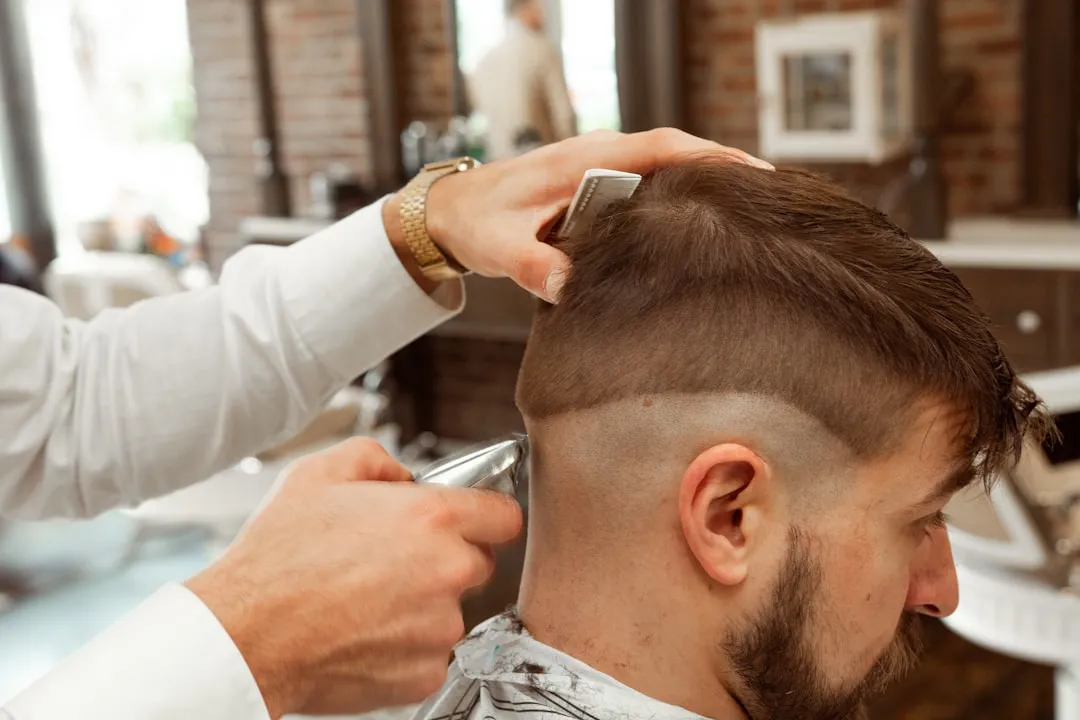
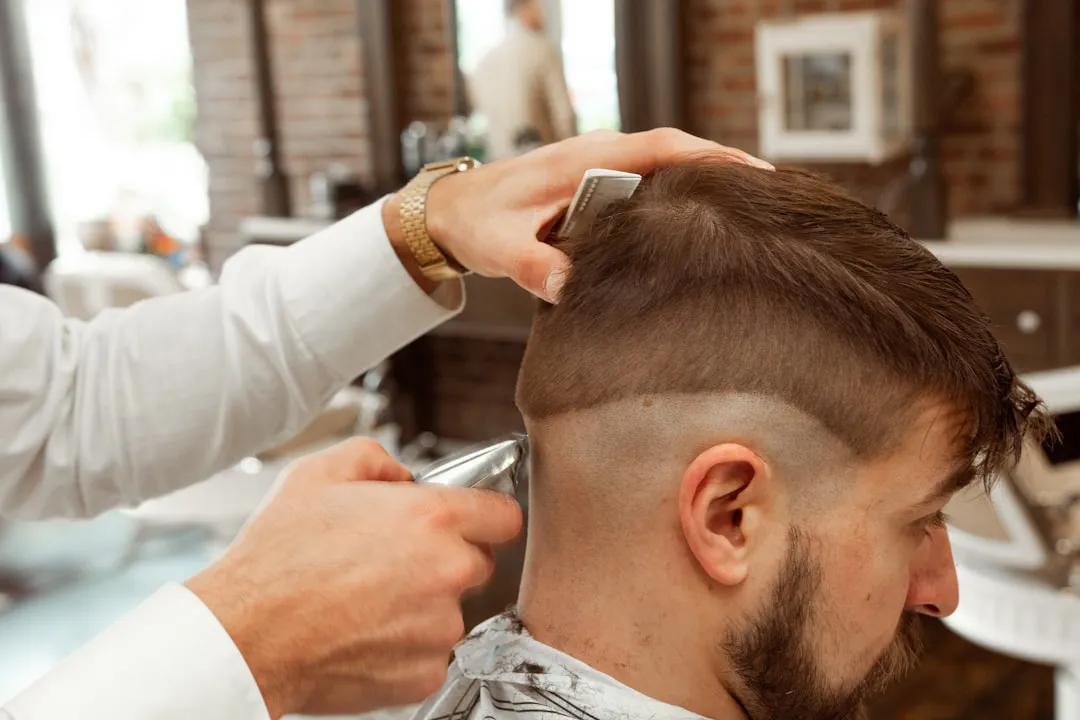
As impressive as artificial intelligence is, it does not replace the experience and creativity of a qualified professional hairdresser. The AI recommendation is an excellent starting point, but the real work is performed by human hands in the salon. A good professional can adapt the cut suggested by AI to the specific peculiarities of your hair, consider your care routine and even guide you on how to maintain the result.
There are technical limitations that AI cannot get around just by looking at a photo. Very damaged hair may need different structure. Very thin hair needs specific techniques.People with scars, freckles or other particular facial features may need creative adaptations that the algorithm cannot recommend. An experienced hairdresser looks at you, talks to you and adjusts all of this in real time.
The best approach is to use AI as a starting point for a productive conversation with your hairdresser. Take the recommendation, show it to the professional and ask for his opinion. This collaboration between technology and human expertise almost always results in much better cuts than either side could independently offer. You leave the salon with a cut that has been carefully thought out, not just recommended by an algorithm.
Myth: AI Haircut Applications Are All the same
There is a mistaken perception that all applications that use artificial intelligence to recommend haircuts work the same way and with the same precision. In fact, there is a huge variation in the quality of the algorithms available on the market.Some have been developed by tech companies genuinely specialized in facial recognition, while others use borrowed and adapted technologies.
The best apps continuously invest in improving their algorithms, training them with millions of images of different ethnicities, ages and hair types. They can recognize nuances that more basic apps can ignore. Some even allow you to see before and after simulated in augmented reality, offering a much more accurate visualization of the cut on your face. Others are significantly more generic and less useful.
When you choose to use one of these apps, search for user reviews and compare recommendations between different platforms. You may find that one particular app performs better than another. Some beauty experts even recommend specific platforms because they recognize the superior quality of the work performed by the algorithm.Do not treat all of them as equivalents, as they definitely are not.
Truth: Technology Will Keep Improving Fast
Artificial intelligence is evolving exponentially, and haircut recommendation tools will get significantly better in the coming years.What looks impressive today will be considered primitive in a few years. Algorithms are being trained with ever-increasing data, learning techniques are getting more sophisticated and hardware is getting more powerful.
You should expect that soon these systems will be able to consider variables that today are impossible to evaluate only with a photo. Perhaps in a few years you will be able to send a video instead of a photo, allowing the AI to see your hair from different angles and illuminations.It will probably be possible to integrate history of previous cuts so that the algorithm better understands your personal preferences.Some researchers work on technologies that could even consider your specific hair texture.
The more people use these tools, the more data the algorithms receive to learn. This continuous feedback loop is making the technology progressively more accurate and useful. The recommendations you receive in two or three years' time will be much better than those available today. Being part of this early-adopter process means you are helping to train systems that will benefit many others in the future.