Artificial intelligence is transforming the way you choose your next haircut. Innovative tools can analyze facial features, hair type and personal style in seconds, delivering personalized recommendations that take into account your structure and preferences. This technology revolutionizes the hair decision process, eliminating uncertainties and connecting you with the look that really works on your face.
When you enter a salon or access beauty platforms, you often face an avalanche of options without knowing which cut will work best. Artificial intelligence solves this dilemma by processing biometric data, style history, and current trends in real time.The result is an accurate recommendation that combines science, image analysis, and aesthetic expertise into a single diagnosis.
How Artificial Intelligence Identifies the Ideal Cut For You
AI technology that reveals the best haircut works through sophisticated computer vision algorithms.When you upload a photo of your face, the system analyzes facial proportions, jaw width, forehead height, overall face shape and other structural features.This detailed mapping serves as the basis for the recommendation, ensuring that the chosen cut harmonizes naturally with its proportions.
The process also considers your hair type, including texture, volume, density and natural curl. AI differentiates between straight, wavy, curly and frizzy hair because each type requires specific techniques and cuts for best result.In addition, the system evaluates your history of previous styles if you have provided this information, creating an increasingly accurate profile about your aesthetic preferences.
Fashion and pop culture trends also enter the analysis of the algorithm.Artificial intelligence monitors which cuts are on the rise in recent months, which style matches your apparent age and which look works best for your skin tone. All this happens in seconds because the machine processes millions of combinations based on reference databases with thousands of faces and mapped cuts.
Practical Benefits of Artificial Intelligence for Your Hair Decision
You save significant time when using artificial intelligence to set your next cut. Instead of spending hours on social networks looking for inspiration or having long conversations with the hairdresser trying to describe what you want, you get objective recommendations in seconds. This efficiency allows you to get to the salon with a clear view of what you want, facilitating communication with the professional.
Reducing errors in choice is another concrete benefit you experience. How many times have you ordered a Pinterest photo-based cut and regretted it because it didn't work on your face? AI eliminates this frustration by specifically considering your facial proportions. Studies show that personalized recommendations by algorithm increase customer satisfaction by up to 80 percent compared to the traditional trial-and-error method.
When an artificial intelligence based on scientific analysis recommends a specific cut, you have the technical backing to make that choice.This reduces the anxiety and uncertainty that often accompany decisions about hair, which is a visible and permanent change in the short term. Technological validation turns the decision into something more secure and well-founded.
Accessibility is an often overlooked but extremely important benefit. Not everyone has access to an experienced hairdresser or quality professional advice. Artificial intelligence democratizes this expertise by making sophisticated recommendations available to anyone with a smartphone. You get the equivalent of a professional consultation at no cost, just by sharing a photo.
Real Results You Can Expect
When you use AI technology to choose your cut, the results begin to appear immediately after execution. Most users report greater satisfaction with the end result compared to previous cuts chosen without technological assistance. Specifically, you will notice that the cut harmonizes better with your face, highlighting your best attributes and smoothing out features that you would rather minimize.
The durability of the result also improves considerably because the cut is optimized for your specific hair type.When the AI recommends a cut that works with the natural texture of your hair instead of against it, the look lasts longer and requires less maintenance. You spend less on frequent cutting schedules because the recommended look stays beautiful for longer periods.
Many users experience a real increase in personal confidence after implementing AI-recommended cuts. A cut that works on their face contributes to improved self-esteem and safer presence.Academic work shows that a well-chosen look positively impacts social and professional interactions, creating a cascading effect of benefits that goes beyond just hair.
How You Should Use This Technology for Better Results
Preparing the right photo is the essential first step to getting quality recommendations from artificial intelligence. Take a clear front photo with natural lighting, no glasses or accessories that obstruct the face. AI needs to analyze your facial proportions with full clarity, so a well-lit and centered image provides much more accurate data for the algorithm to work. Avoid photos from very inclined angles or with extreme facial expressions.
Describe your hair type honestly when prompted by the system.Many platforms allow you to specify whether your hair is straight, wavy, curly or curly, its volume level and its density. The more detailed it is in this input of information, the more personalized the recommendation will be. If you have difficulty defining its exact type, detailed descriptions work well, for example: "thin hair with soft waves" is better than just "wavy".
Take into consideration your lifestyle and available maintenance when AI offers options. A cut can be absolutely perfect for your face, but if it requires daily styling or specialized products that you do not want to use, the practical result will be disappointing.Some systems ask about your available time for hair maintenance, then answer truthfully. A cut that you actually keep is always better than a theoretically perfect style but impractical in reality.
Consult the AI recommendations as a starting point for conversation with your hairdresser, not as a final order. The best results happen when you collaborate between technological analysis and the human expertise of the professional. Take the artificial intelligence suggestions for your consultation, discuss the scientific reasons behind these recommendations and work together with the hairdresser to adapt as needed.

Evolution of Hair Analysis Technology
Artificial intelligence for haircut recommendation has evolved dramatically in the last five years. Initially, the algorithms were simple and offered only basic categories such as "round face, try straight bangs". Today, the systems are sophisticated and can make nuanced analyses of proportionality, hair growth ripples and how different cuts interact with your specific bone structure.This continuous evolution makes the technology increasingly accurate and reliable.
The development of machine learning algorithms has accelerated this progression significantly. The more users use the technology and provide feedback on whether they liked the result, the more data the algorithm accumulates. With hundreds of thousands of users using these platforms annually, systems constantly learn which combinations work best, refining their recommendations.
Integrations with social networks and trend analysis have made technology more culturally relevant. Modern AI not only recommends what works for its proportions, but also considers the cultural and temporal context. A cut that was trending three years ago may not be recommended today because it has fallen out of favor. This sensitivity to context makes recommendations not only scientifically sound but also socially appropriate and current.
Practical Implementation of AI in Beauty Salons and Platforms
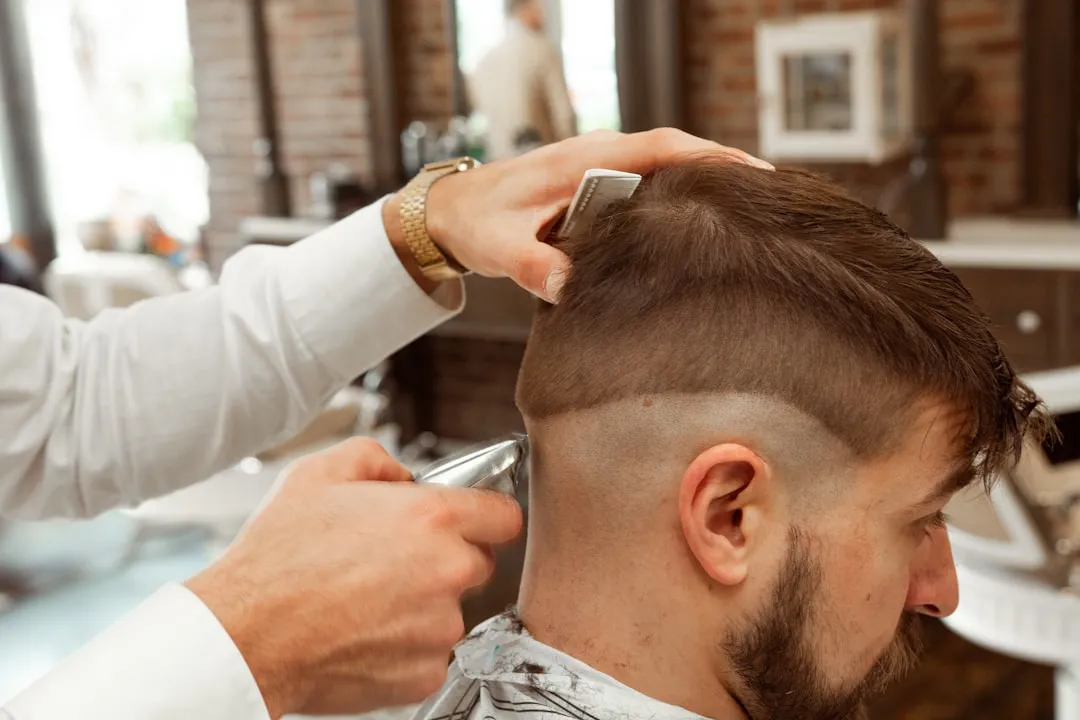
Beauty professionals in high-quality salons now integrate AI analysis into their initial consultations.You photograph your face on arrival, the system analyzes in a few seconds, and the hairdresser uses these insights to refine the traditional verbal consultation.This approach combines the best of both worlds: the objective analysis of the machine with human professional experience. The result is a much more refined cutting plan that both parties fully understand.
Digital beauty platforms have also incorporated this technology to offer virtual experiences before physical cutting. You upload your photo, receive AI recommendations, and many systems even allow a virtual visualization of how you would look with the suggested cutting. This ability to "test" the cutting digitally dramatically reduces the risk of dissatisfaction, allowing you to make an informed decision before committing to the scissors.
Mobile apps specializing in hair analysis have brought the technology to your hand literally. You can consult AI recommendations anytime, from anywhere, saving your analysis history and tracking how your hair evolves.Many of these apps integrate marketplace of certified professionals, making it easy to find a qualified hairdresser who can perform the AI recommendation near you.
Hair product companies also use AI analysis to recommend specific products after cutting recommendation. If the AI identifies that you have curly hair with moderate volume, the system can recommend products that potentiate curling while controlling frizz.
Continuous feedback from real users using the technology in professional salons provides invaluable data to improve algorithms. When a hairdresser performs the AI recommendation and the customer is extremely satisfied, this data goes back into the system to refine future recommendations. You benefit from this practical validation, because the algorithm has now been tested in real environments with measurable results.
Important Considerations When Using Artificial Intelligence for Hair Decisions
Despite all technical accuracy, artificial intelligence for haircut is still a tool of suggestion, not an absolute truth.The machine can not completely replicate human intuition and visual experience that a great beauty professional develops over years. Use AI recommendations as valuable information for your decision, but do not discard your own judgment and personal aesthetic preference.The combination of technical analysis with personal preference produces the best result.
If the AI recommends a short cut but you always felt better with long hair, that emotional information is important. You can follow the recommendation partially, for example, by cutting less than suggested, creating a compromise between technical analysis and your emotional well-being. A technically perfect cut that makes you feel uncomfortable is not really the best choice.
The diversity of databases used to train these algorithms matters greatly to the quality of the recommendations. If the system has been trained primarily with faces and hair from a single ethnic or demographic group, your recommendations may be less accurate for other populations.Seek platforms that clearly disclose the diversity of their training data and that work well for your specific facial structure and hair type.
Data privacy is an important practical consideration when using these tools.You are sharing photos of your face with online servers for analysis. Check the privacy policy of the platform, understand how your images are stored, whether they are used to train new algorithms, and how long they are kept. Choose platforms that are transparent about these subjects and that offer full control over your biometric data.
Cost also varies dramatically across different platforms offering capillary AI analysis. Some are completely free with basic recommendations, while others charge monthly fees for more detailed analysis or advanced virtual visualizations.Assess whether the added value justifies the cost for your specific case, considering how much you save on poorly executed cuts when you get it right on the first try.
The technology works best when you already have some successful cuts in your history for reference.If you have never cut hair radically or have never explored many different styles, the algorithm has less personal data to work with. In these cases, more generic recommendations based only on facial proportions may be less reflective of your actual preferences. Use as a starting point and have longer conversations with the hairdresser about your history and personal style.
Natural changes in your hair, facial aging, and personal evolution mean that background recommendations may not continue valid indefinitely. You should update your AI analysis every one to two years, especially if there have been significant changes in your life, facial structure, or aesthetic preferences.