Learning welding is a smart decision for anyone seeking a stable and well-paid career.A welder's course provides the practical and theoretical tools necessary to master a highly demanded profession in the market.
Welding is an essential skill in a variety of industries, from construction to metal structure manufacturing.If you are considering starting a degree in this area, this comprehensive guide introduces you to everything you need to know to start from scratch and become a qualified professional.
What is Welding and Why Learn
Welding is the process of joining two metal parts through intense heat, creating a permanent and resistant bond. This fundamental technique allows the construction of robust structures in buildings, ships, industrial machinery and more. When you learn to weld properly, you master a skill that ensures employability in almost any region of the country.
The demand for skilled welders continues to grow, especially in sectors such as oil and gas, heavy construction and manufacturing. Companies are constantly looking for trained professionals who can perform jobs accurately and safely.In addition, the profession offers possibilities for significant salary progression as you gain additional experience and specializations.
Aprender Cada Día Soldadura
AprenderCadaDía
Types of Welding Processes You'll Learn
A comprehensive welder course teaches several processes, the main ones being coated electrode, MIG/MAG and TIG. The process with coated electrode is the most traditional and versatile, working in almost any environment and being ideal for beginners. MIG/MAG welding uses a continuous wire and protective gas, offering greater speed and quality, being very common in modern industry.
The TIG (tungsten/inert) process is more sophisticated and allows high quality welds in metals such as aluminum and stainless steel, requiring greater dexterity of the welder. Each process has its advantages and specific applications, so a complete training addresses them in a balanced way. You will learn when to use each technique according to the type of material and the work situation presented.
Basic Requirements to Start Your Learning
To start a welder course from scratch, you do not need to have previous experience in metallurgy or metalworking.The fundamental requirement is to have complete elementary education and minimum age of 16 years in many institutions. You should also be in good general health, as the work involves standing for prolonged periods and dealing with high temperatures.
Proper visual acuity is important to identify defects in welds and work accurately on metal joints. You should also be willing to work with personal protective equipment (PPE) constantly and strictly follow safety protocols.A dedicated attitude and patience to learn through repetitive practice are qualities that will facilitate your progress during training.
Structure and Duration of a Professional Course
A typical welder course lasts between 3 and 6 months, depending on the depth of content and the weekly workload offered. Faster courses focus on the essentials, while more extensive programs include welding special positions, quality inspection and preparation for international certifications. Most courses combine theoretical classes with intensive laboratory practice, ensuring that you truly master the techniques.
Theoretical classes cover metal properties, reading technical drawings, strength calculations and fundamental safety standards.Practice represents the bulk of the course, where you work with real equipment and develop the dexterity required to make consistent and quality welds.Many courses offer modules that can be taken at your own pace, allowing you to study without abandoning previous commitments.
Equipment and Materials You Will Use
During your training, you will handle welding machines of different types and powers, starting with the simplest models to the most advanced ones. Electrodes, wires and protective gases are essential consumables that you will learn to select according to the specific application. Protective equipment includes helmet with automatic eye protection, leather aprons, heat-resistant gloves and safety boots.
You will also work with complementary tools such as steel brush for cleaning, slag hammer to remove waste from the weld, jigs to measure quality and accurate measuring equipment. Familiarity with these instruments is crucial to ensure professional results in any work situation. Quality institutions provide all the necessary equipment during classes, allowing you to focus on learning without worries about initial investments.
Technical Skills You'll Develop
A key aspect you will learn is the control of the position and angle of the torch or electrode relative to the workpiece, as small variations dramatically affect the quality.The speed of displacement is also critical: too fast results in weak welds, while too slow causes excess heat and deformation of the material. You will develop the muscle memory necessary to maintain these characteristics consistently, even after hours of continuous work.
Defect recognition and correction is another essential competency that you will acquire throughout the course.You will learn to identify porosity, lack of fusion, cracking and other visual imperfections, understanding their causes and how to avoid them.The ability to read and interpret technical specifications in drawings will also be developed, allowing you to perform exactly what is requested without the need for constant supervision.
Safety: Priority throughout the Learning Process
Safety is not a secondary topic in a welder course; it is the foundation upon which all training builds. You will learn about the specific risks of welding, including burns, exposure to toxic fumes, ultraviolet radiation and electrical shock injuries.Each responsible institution devotes significant time to teaching how to identify hazards and implement appropriate controls in any work environment.
The correct use of personal protective equipment is emphasized repeatedly, becoming an automatic habit.You will understand why each piece of PPE is necessary and the consequences of neglecting it. In addition, you will learn about proper ventilation, preventive maintenance of equipment and emergency procedures, developing a mindset that values the prevention of accidents in all future professional situations.
Certifications and Validation of Competencies
After completing a welder course, you can seek internationally recognized certifications that prove your technical competence. The most sought after is the certification by the AWS (American Welding Society) standard, which requires approval in practical tests where you perform specific welds that are rigorously inspected. Other organizations such as ABNT (Brazilian Association of Technical Standards) also offer validations accepted by the Brazilian market.
These certifications significantly increase your chances of getting better positions and salaries as they prove that your competency has been validated by independent third parties.Many courses include specific preparation for these tests in their programs, providing simulated and expert guidance.Investing time in obtaining these qualifications is a strategic decision that differentiates quality professionals in the competitive market.
Career Opportunities After Course Completion
Skilled welders find opportunities in numerous professional sectors, from small workshops to large multinational industries.In heavy construction, you can work on buildings, bridges and large structures.Manufacturing industries offer stable positions where you perform welding of diverse components in controlled and well-structured environments.
The oil and gas industry represents one of the largest employers of welders, with particularly competitive salaries for qualified professionals.Marine, aeronautical and automotive industries also demand specialized welders constantly.As you gain experience, you can specialize in areas such as subsea welding, high pressure welding or quality inspection, further expanding your opportunities and earning potential.
Differences Between Face-to-face and Online Courses
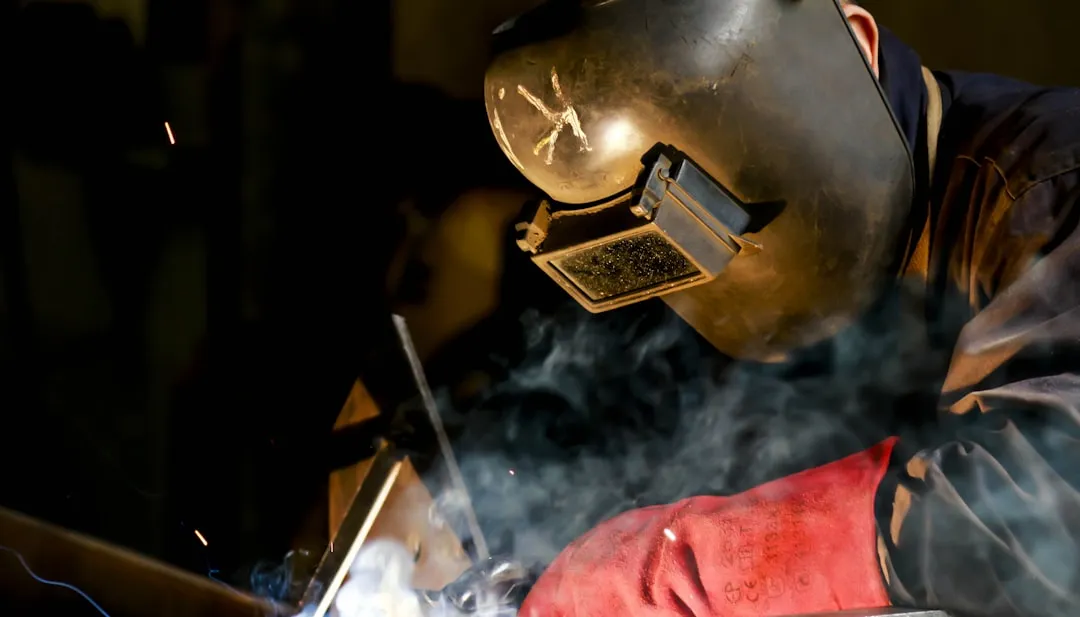
A face-to-face welder course offers undeniable advantages, especially the opportunity to practice with real equipment under the direct supervision of experienced instructors. You receive immediate feedback, can correct errors in real time and live with other learners, creating a professional network from the beginning. Continuous practice in a professional environment accelerates your learning curve and builds confidence in the execution of techniques.
Online courses work as a theoretical complement or update for professionals who already work, but can never completely replace practical training. If you are starting from scratch, a face-to-face approach is essential to develop the necessary motor skills and tactile sensitivity.Some hybrid institutions offer online theory and face-to-face practice, balancing flexibility with quality learning.
Cost and Initial Investment
The cost of a welder course varies according to the institution, geographic location and program extension. Fast courses in public technical schools can be free or charge symbolic amounts, while courses in private institutions vary between R $ 1,500 and R $ 5,000 generally. Federal technical universities often offer higher quality programs with reduced costs for Brazilian citizens.
This investment is recoverable quickly, since experienced welders earn between R$ 2,500 and R$ 4,500 monthly on average, and can be significantly superior in specialized sectors. Some courses offer facilitated installment or partial scholarships for students who meet specific criteria. Research institutions in your region and check funding possibilities before making your choice.
Frequently Asked Questions About Soldier Courses
A common question is whether you need to have exceptional physical strength to be a welder. The answer is no; the job requires endurance to be standing and in awkward positions, not necessarily extreme muscle strength. Motor coordination, precision and patience are much more important attributes than pure brute force.
Another frequent question is about the maximum age to start a course. There is no age limit to learn welding; many adults transition careers and begin training in this area successfully.The determination and willingness to learn surpass any consideration of chronological age.
People also question whether it is possible to work as a freelance welder or undertake in this area. Definitely yes; many qualified welders work on their own, providing services to multiple clients or constituting small workshops. This route offers greater flexibility and earning potential, although it requires additional business management skills.
Doubts about the labor market also arise frequently.The reality is that the demand for qualified welders remains consistently high throughout Brazil and internationally. Professionals with valid certifications find opportunities regularly, especially in regions with significant industrial activity.
Some people fear automation will eliminate opportunities for welders. Although robots perform welding in large volumes, specialized welding, repair and work in hard-to-reach places will continue to demand human skill indefinitely.
How to Choose the Best Institution for Your Course
When looking for a welder course, check the history and reputation of the institution with local employers and professionals in the area. Quality institutions have partnerships with companies that hire their students, indicating that the training meets the expectations of the real market. Request references and talk to previously trained students when possible.
Examine the physical structure of the institution, especially the laboratory where you will carry out the practice. Well-maintained modern equipment allows for superior learning in relation to old and disabled instruments. Also confirm the qualification of instructors; those with significant industrial experience teach practical skills that go beyond pure theory.
Consider whether the course offers preparation for market-recognized certifications and what are the additional fees. Transparent institutions clearly explain the full curriculum, exact duration, schedules, and total investment required.Watch promises of guaranteed employment or astronomical gains; honest courses describe market realities accurately.
Personal Progress During Learning
Your development throughout the welder course will follow a predictable trajectory, starting with simple welds in easy positions and progressing to challenging configurations.The first few weeks focus on understanding the basic controls and developing comfort with the equipment. You create test welds that clearly show errors, making it easier to understand what needs to improve.
Progressively, you learn welding in different positions: flat, horizontal, vertical and above the head, each presenting unique challenges.The position above the head is often the most difficult, requiring significant adaptation of technique and control. With consistent practice, its execution improves dramatically, and tasks that seemed impossible become automatic.
The moment you can perform a perfect weld, approved on the first inspection, marks an important psychological turning point. Trust increases, and you understand that the techniques taught really work when applied correctly. This point usually reaches between half and two-thirds of the course, motivating you to seek even greater improvements.
Practical Preparation for Your First Professional Experience
In the final stages of the course, you will participate in projects closer to the real professional environment, where you perform complete structures instead of test samples. These simulated experiences prepare you for the pace and pressures of real work.
Your instructors will present challenging situations you will encounter in practice: thick materials, fitting problems, poor lighting conditions and uncomfortable positions. Dealing with these difficulties during training reduces culture shock when you start your first formal job.
Continuity of Learning After the Initial Course
Your education as a welder does not end when you complete the initial course; in reality, it is when true professional learning begins.In the first years of work, you refine techniques, learn specifics of different materials and companies, and develop speed. As you gain experience, opportunities arise to specialize in specific processes or advanced techniques.
Many welders seek additional certifications and training in topics such as aluminum welding, high-pressure pipework or quality inspection. These specializations increase their value in the market and open doors to supervisory or advisory positions.The industry constantly changes with new technologies, so keeping up to date through complementary courses is a shrewd investment in your career.
Considering everything presented, learning welding through a qualified professional course is a strategic decision that opens multiple possibilities of a stable and well-paid career. The initial investment in time and resources is quickly recovered through the salaries offered by the profession.If you seek a practical skill, demanded by the market and portable to any region of the country, a welder course represents exactly that.
Start by researching reputable institutions in your region, review their programs and structure, and consider your personal circumstances before committing. Once started, dedicate yourself completely to learning, as the quality you develop during training will determine your future professional success.