Can you measure land with precision using just a smartphone? Yes, and this technology is revolutionizing how property owners, real estate agents, and engineers work in the field. Modern apps to measure land offer results comparable to traditional equipment, with zero or very low cost.
Many professionals still distrust this solution because of myths rooted in concerns about its effectiveness. This article separates facts from fiction, showing exactly how these apps work, when they really work well, and in which situations you should seek alternatives. You will understand the real limits of this technology and learn how to use it intelligently in your daily work.
The Myth: Apps to Measure Land Are Completely Inaccurate
The belief that any measurement app is useless stems from poorly conducted tests and unrealistic expectations. When you use an app to measure land under suitable conditions—flat ground, good lighting, stable GPS—the margin of error falls between 1% and 5%, which is perfectly acceptable for most practical uses. Property owners who need to define lot boundaries, agents who conduct initial assessments, and engineers conducting preliminary surveys all obtain reliable data with these tools.
The problem occurs when you try to use these apps on mountainous terrain, with many obstacles, or in dense urban areas where GPS signal is blocked by buildings. In these specific situations, yes, accuracy drops drastically. But this does not mean the technology is bad; it simply means you are trying to use it outside its context of effectiveness. A thermometer does not work well for measuring distance, just as these apps have specific limitations you need to respect.
The Truth: There Are Different Types of Apps to Measure Land
In the market, you basically find three categories of tools. GPS-based apps use your phone's positioning to track points on the land, working best in open and rural areas. Augmented reality apps use your phone's camera to measure distances and create virtual images, being ideal for quick measurements of indoor spaces or small outdoor areas. Image processing apps, in turn, allow you to take aerial photos and analyze them later, being useful for remote analysis.
Each of these types has its strengths and weaknesses. An app with excellent GPS for open terrain may fail completely inside a forest. An AR app that works perfectly in an apartment may be inaccurate for measuring a five-thousand-square-meter land. Understanding which tool to use in each situation is the key to obtaining reliable results. You would not trade a wrench for a hammer; similarly, you should not use the same tool for all measurements.
Myth Versus Reality: Accuracy in Different Terrains
Many believe that a good app to measure land works equally well anywhere. This expectation is unrealistic and based on misunderstanding how positioning systems work. On completely flat terrain, without obstacles and with open sky—such as a farm or desert field—you can expect errors of only 2% to 3%. On terrain with moderate inclines, that error rises to 5% to 8%, because the app has difficulty calculating vertical height accurately.
In urban areas with tall buildings, the error can jump to 15% to 25%, making the result inadequate for official real estate transactions. In dense forests or near large metal structures, GPS simply does not work. Therefore, the truth is that accuracy depends heavily on the environment where you are measuring. You are not using a bad app; you are simply using a tool that has its own contexts of better performance, exactly like a compass works better away from magnetic fields.
The Reality: Unbeatable Cost-Benefit for Preliminary Measurements
Historically, measuring land required hiring a professional surveyor, who charged between $100 and $400 for a basic survey. This cost represented a significant obstacle for owners wanting quick information. Today, with a free or low-cost app on your smartphone, you get an estimate in minutes. This change does not mean professionals became obsolete, but that the initial assessment process is now democratic and accessible.
The practical logic is simple: you do not hire a surveyor to check whether a plot is approximately 1,000 square meters or 1,500 square meters. You take that quick measurement with the app, and only if the transaction is confirmed, if the project is approved, or if you really need formal technical data, do you invest in professional services. This saves time and money, allowing you to make more informed decisions before spending significant resources. Many real estate and engineering professionals now use these apps as a first screening layer, validating later with professional measurements when necessary.
Myth: Smartphone GPS Is Not Reliable for Measurements
This statement is partially true, but the complete truth is far more nuanced. Modern smartphone GPS has accuracy of ±5 to ±10 meters in open areas, which is insufficient for measuring the width of a street, but completely adequate for measuring land lots. When the app collects multiple GPS points and calculates the area between them, individual errors partially compensate. A 1,000-square-meter lot measured this way might result in 1,010 square meters, an error of only 1%.
Smartphone manufacturers invest billions in improving their GPS systems, as this technology is fundamental for maps, navigation, and location services. Current GPS chips are much more accurate than they were five years ago. Moreover, many apps to measure land use correction techniques that further reduce errors, such as averaging multiple readings or discarding obviously problematic readings. Therefore, saying GPS is not reliable is an exaggerated oversimplification; the correct statement would be that GPS has specific limitations that need to be understood.
The Truth: Environmental Factors Affect the Quality of Any Measurement
Perhaps the most dangerous myth is one suggesting that professional measurements with expensive equipment are immune to environmental factors. In fact, all measurements suffer under adverse conditions. A surveyor with a theodolite will have difficulty on very steep mountainous terrain, in areas with great slope, or during heavy rain. A drone may not be able to fly on days with strong wind. A GPS app will have problems with persistent cloud cover or near large structures.
What changes between a professional and a casual user is the ability to recognize when conditions are not ideal and choose whether to take the measurement anyway or postpone. A surveyor will refuse work under conditions that compromise accuracy; a casual app user sometimes does not notice when they are obtaining bad data. You should learn to make this assessment: open and clear sky? Proceed with confidence. Tall buildings around? Proceed with caution. Inside a dense forest? Look for another solution. This situational intelligence is more important than the tool itself.
Myth: You Cannot Use Apps to Measure Land for Legal Purposes
It is true that measurements made with apps do not have legal validity for formal real estate transactions in any jurisdiction. For legal purposes, you need a technical report signed by a registered professional. However, this legal limitation does not make apps useless for legal purposes; it simply means you cannot completely replace a professional. Many notaries and government agencies now accept apps as supplementary documentation, even if not as the sole source.
Furthermore, there are legal contexts where app accuracy is more than sufficient: defining informal environmental protection areas, calculating land occupation rates for residential renovation, estimating costs for landscaping or land clearing, and even serving as an initial reference in property division processes before professional surveying. You can use app data to reduce the scope of professional work, saving money. Therefore, the myth is not that apps are legally valid on their own—that is true—but that they are completely useless for any legal purpose, which is false.
The Reality: Works Best With Training and Understanding of Limitations
The reason many people have negative experiences with apps to measure land is simple: they do not know how to use them correctly. You do not randomly open the app, walk across irregular terrain while holding your shaking phone, and expect reliable data. Accurate measurements require method. First, you should choose a day with stable GPS—preferably when there is good satellite coverage, which occurs best at midday hours on clear days. Second, you should keep the phone stable while marking each point, avoiding rapid movement or vibration.
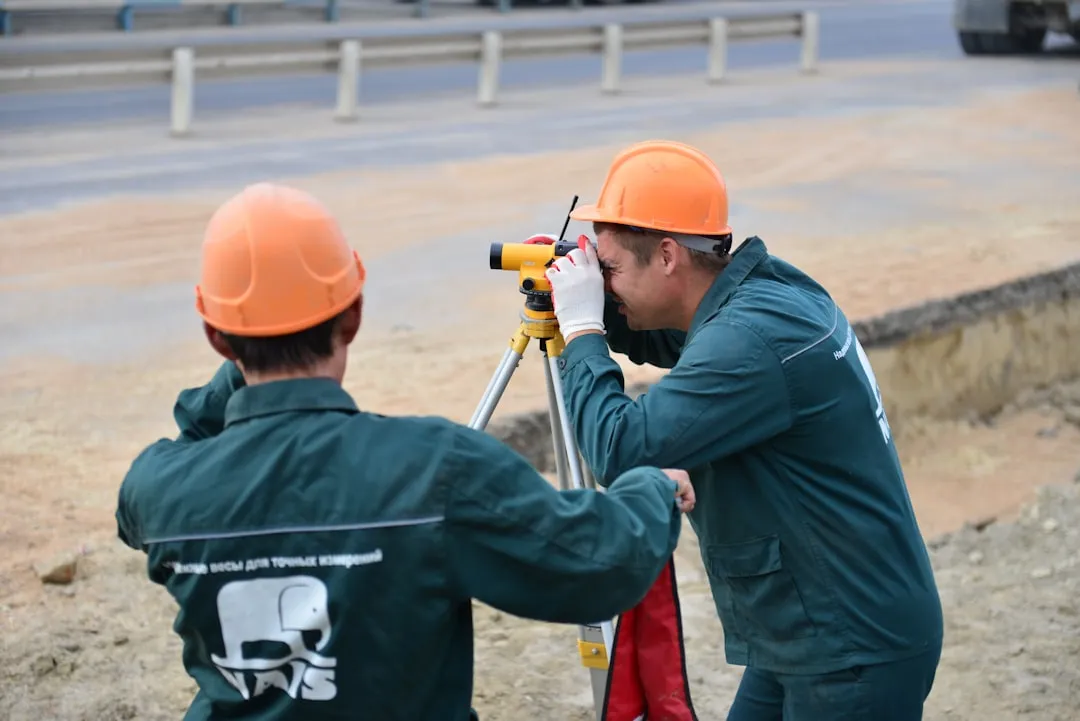
Third, you should mark points following the land perimeter in logical sequence, not skipping points or marking randomly. Fourth, you should take multiple measurements of the same land and compare the results; if they vary greatly, something is wrong. Fifth, you should verify whether the result makes sense compared to a visual estimate or against known dimensions of nearby lands. Experienced professionals who use these apps implement these procedures and obtain excellent results. Amateurs who open the app and expect magic are invariably disappointed.
Myth: All Apps to Measure Land Are the Same
This is a misguided generalization that leads you to make poor decisions. In the market, you find everything from apps made by hobbyists with confusing interfaces and inconsistent logic, to tools developed by companies specialized in geomatics with refined algorithms. The app your friend heard about may be completely different in quality from what you can download today. Checking the store rating, reading recent comments, and testing the app before relying on it professionally is essential.
Some apps use only simple GPS, while others integrate GPS with base map data to correct errors. Some allow only manual point marking, while others offer automatic tracking or integration with Google Maps. Price also varies widely: there are free competitive options, ad-supported versions, and professional apps with monthly subscriptions. You should spend a few minutes researching which app best fits your specific use case, rather than simply downloading the first one that appears.
The Truth: Integration With Other Tools Multiplies Usefulness
The real power of modern apps to measure land lies in their ability to integrate with other systems. When you measure land, you can export data in formats compatible with design programs, CAD, or mapping tools. You can overlay your measurements on satellite images from Google Earth to visualize the bigger context. You can import existing cadastral maps and compare with your measurements, identifying discrepancies. This interconnection between tools amplifies the usefulness of each.
Some apps offer integration with real estate platforms, allowing you to send land data directly to property listings. Others connect with budgeting software, facilitating calculation of landscaping or cleaning costs. This flexibility of integration means you are not just getting numbers; you are feeding an entire ecosystem of professional tools. When well leveraged, these integrations save hours of manual work and significantly reduce data transcription errors.
Myth: You Need Differentiated GPS to Get Accurate Results
Many believe that only top-of-the-line smartphones with ultra-precise GPS chips can adequately measure land. In fact, any modern smartphone from the last five years has GPS completely capable of this work. An iPhone 12 and a three-year-old Samsung A51 obtain very similar results under equal conditions. The determining factor is not the cost of the phone, but environmental conditions and how you use the tool.
Some manufacturers advertise "professional-grade GPS" in their devices, which is exaggerated marketing. The real difference lies in the software that processes the data, not the GPS receiver hardware itself. Well-programmed apps running on a basic phone with standard GPS can obtain better results than poorly optimized apps on an expensive phone. You should not buy a new smartphone expecting to improve land measurement precision; instead, you should invest in learning to better use the equipment you already have.
The Reality: Cross-Validation Is the Secret to Reliability
Experienced professionals who use apps to measure land never trust a single measurement. They perform multiple passes around the perimeter, ideally at different times or as best they can, comparing results. If the first measurement results in 2,345 square meters, the second in 2,362 square meters, and the third in 2,340 square meters, you have reasonable confidence that the actual area is between 2,340 and 2,362. Small variation—less than 1%—suggests your methodology is solid.
Additionally, you should validate against other references. If the land has a known dimension—for example, you know one side is exactly 50 meters because the adjacent property is one you already know—use the app to measure just that side and see if it matches. If it matches, your confidence increases. If it does not, something is wrong: perhaps poor GPS conditions, perhaps incorrect app use, perhaps terrain with slopes the GPS does not capture well. This methodological approach of cross-validation transforms a casual app into a reliable tool.
Myth: Augmented Reality Apps Are More Accurate Than GPS
Augmented reality looks futuristic and accurate when you see your smartphone screen showing virtual lines over real terrain. This perception of accuracy is partly illusory. AR apps work very well for measuring distances on nearby and flat objects, such as room wall dimensions. But for large land with height variation, they face genuine difficulties. The smartphone camera needs reference points, distinctive features, to calculate depth and distance, and on an open field or uneven terrain, these reference points may not be available or may be misleading.
Moreover, AR apps have range limitations. You can only accurately measure what you can see in your phone's camera, meaning for large land you would need to take many photos and combine them—a tedious process prone to errors. In contrast, GPS-based apps track you as you walk, capturing the entire perimeter continuously. For large land, GPS is more practical; for small areas and quick measurements, augmented reality may be more accurate. Saying one is categorically superior to the other ignores that each technology has its ideal context.
The Truth: Context Determines Which Tool to Use
The choice between different types of apps to measure land should be based on your specific use case, not on general preference. If you need to measure a rural property lot of 5,000 square meters in open terrain, a GPS app is the obvious choice. If you need to measure the exact dimension of a garage for a door, augmented reality is superior. If you need to analyze multiple lands in a region, perhaps aerial image processing is more efficient.
You should ask yourself a few questions before choosing your tool. What is the land size? What accuracy do you really need? What is the environment—open area, urban, forest? How much time do you have? What is your budget? Answers to these questions guide you toward the right tool. An experienced professional does not have a favorite tool; they have several tools and know when to use each. Developing this versatility increases your effectiveness far more than perfectly mastering a single tool.
Myth: App Measurements Never Match Professional Surveys
This myth is perpetuated by anecdotal stories of people who measured land with an app, then paid for a professional survey, and obtained completely different results. These discrepancies are real, but usually have simple explanations. Sometimes the land has a small parcel that was not correctly identified in the app measurement. Sometimes the surveyor discovers that what you thought was your land boundary actually is not—there is a fence a few meters beyond that marks the real boundary. Sometimes there are differences between average land height and actual height, which affect area calculations.
However, many engineering and surveying professionals confirm that, when an app is used correctly under suitable conditions, results fall within 2% to 5% of a professional survey. This difference is small and usually not relevant for most applications. The myth arises because stories of silent success do not reach everyone's ears—nobody comments when their app works perfectly—while stories of failure are told and retold. Your neighbor who has been successfully measuring land for five years does not talk about it as much as the one who tried once and got a horrible result.
The Reality: Legislation Evolves and Apps Gain Greater Acceptance
In some developed countries, real estate authorities and government agencies are beginning to accept measurements made with certified apps as auxiliary documentation in transactions. This trend will eventually reach other places as the technology proves reliable and legislation modernizes. Some notaries and city halls already accept app data as an initial reference, requiring confirmation only if significant discrepancies exist. This reduces cost and time in bureaucratic processes.
For you, this evolution means that investing time to learn these apps well is not a waste. The trend is they will become even more important and integrated into professional processes. Large real estate and engineering companies already include app measurements in their workflows as a first layer, saving resources. You who learn today have an advantage over those who wait years to finally recognize the usefulness of this technology.