
Training at home has become a reality for millions of people seeking practicality and flexibility in their exercise routine. An app for training at home offers personalized plans, demonstration videos and progress tracking, transforming your environment into a complete gym.
In this practical step-by-step guide, you will learn how to choose, install and use a home workout app strategically to achieve your fitness goals.We will cover everything from selecting the best app to techniques to maximize your results without leaving home.
Understanding the Top Types of Home Training Apps
There are several categories of applications available, each meeting specific user needs. Apps with pre-programmed workouts offer ready-made sequences that you just follow, making it easy for beginners who do not know where to start. These are ideal when you want simplicity and do not want to think about the structure of the workout.
The apps with customization adjust the exercises according to your level, available equipment and goals. You answer some initial questions and the app assembles a unique plan for you, tracking your progress week after week. This approach is more effective because it adapts to your body and your limitations.
There are also video-based apps from certified instructors that guide every movement in technical detail. These ensure you perform the exercises correctly, reducing the risk of injury. Finally, we find community apps that connect you to others, creating a motivating environment with challenges and sharing results.
Step 1: Set Your Goals Before Choosing the App
Before you download any app to train at home, clearly determine what you want to achieve. Your goals may be weight loss, muscle mass gain, improved cardiac endurance or simply maintaining health.Each goal requires a different type of workout, and not every app serves all goals.
Also consider your current level of experience with physical exercises. If you are a beginner, look for an application that offers modifications for each movement and gradual progression of difficulty. If you already have experience, you can opt for more challenging apps with advanced variations of the exercises.
Another important factor is the time available in your routine. Some apps offer 15-minute workouts for those who are always busy, while others propose 45 to 60-minute sessions for those who want faster results. Be realistic: choose something you can really do regularly, because consistency is key to any progress.
Step 2: Evaluating Essential Features of a Good App
An app for training at home should offer clear visual demonstrations of each exercise at different angles. You need to understand exactly how to make the right movement, because technical errors compromise results and cause injuries.Search for apps with high definition videos, cameras at different angles and explanations of each step.
Tracking ability is another crucial feature that differentiates a good app from a mediocre one. The app should record your workouts, show progress on charts, and allow you to see how many sets and repetitions you have done previously.
Make sure the app allows you to choose equipment you really have at home. If you do not have dumbbells but have elastic band and your own body weight, the app should offer alternatives for all exercises.The flexibility to adapt workouts to your equipment limitations is essential.
The app interface should be intuitive and easy to navigate even when you're sweaty and tired. You don't want to waste time looking for the next exercise or trying to understand how to use the app during the session. Good design keeps you focused on workouts, not technology.
Step 3: Installing and Configuring Your Application
After choosing your app to train at home, download it from the official app store of your operating system. Create an account with accurate information about your age, weight, height and physical activity history.This data helps the app customize your plan and set realistic goals for you.
During the initial setup, you will answer questions about your goals, experience level and limitations or previous injuries.Be honest in these answers, as the app algorithm relies on this information to put together a safe and effective plan.If you mention that you have knee pain, the app will avoid exercises that overload this joint.
Choose a day of the week to start your program and set notification reminders for the hours you plan to train. Consistency depends on habit, so placing alarms and warnings increases your chances of following the plan. Many apps allow you to customize these notifications, so set them up non-invasive but effective.
Explore all the features of the app before your first session. Understand how to pause, rewind videos, mark exercises as complete and view your next workout. This familiarization avoids frustrations during exercise and makes the experience more fluid and enjoyable.
Step 4: Structuring Your Workout Environment
Your home workout space does not need to be large, but it should be safe and functional. Clean the area, remove objects you can hit during arm or leg movements, and make sure you have enough space to lie on the floor if necessary. A 2x2 meter area is generally suitable for most exercises.
Invest in a yoga mat or mat to protect your body and joints. These items reduce impact, comfort during floor exercises, and visually define your workout space.A mat also prevents you from burning valuable energy while staying comfortable on hard surfaces.
Always have water at hand, in a bottle that you position close to your space. Hydration during training improves performance, prevents dizziness and helps recovery. If the app suggests intervals, use this time to drink water and slow down a little.
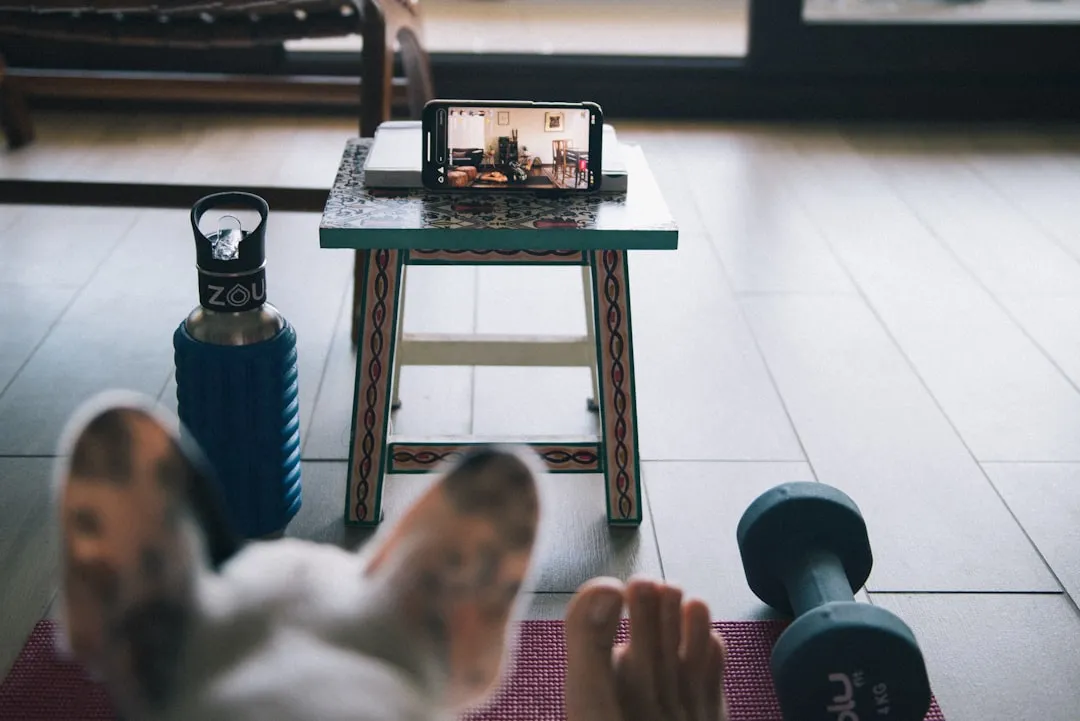
Wear comfortable clothes that allow total freedom of movement is critical for any session. You do not need expensive gym clothes, just something you can move around without restrictions. Shoes also matter: shoes with good support avoid twists and offer stability during impact training.
Step 5: Starting Your First Session with the App
Open the app to train at home at the time you set and allow yourself to be present mentally. Before you start, warm-up is non-negotiable: most good apps include a 3 to 5 minute warm-up that prepares your body for the effort. Skip this phase only in extreme situations, as warm-up reduces injury risks and improves your overall performance.
Follow the app religiously in the first session, without trying to add or remove exercises. You still do not know the program and its designer is right in the order and selection of movements. Trust the process, complete each exercise as shown and note how you feel after finishing.
Don't worry if the first session seems too easy or too difficult. The app will adjust the difficulty in the next few days as you provide feedback on how you felt. After each workout, the app usually asks your difficulty perception, and this information will refine your future program.
Finish your workout with stretching, which most quality apps include at the end. Stretching reduces muscle aches in the days ahead, improves flexibility and helps your heart rate to normalize gradually.
Step 6: Tracking Progress and Adjusting Your Plan
Most home training apps offer analysis and history sections. Regularly access this data to see how many workouts you have completed, what weight or how many repetitions you have achieved in each exercise.
Every 3 to 4 weeks, the app should propose progressions in your workouts. This means increasing repetitions, adding sets, reducing rest time or introducing more difficult variations of the exercises. This progression is vital to continue seeing results, as your body adapts to the stimuli and needs to be challenged continuously.
If you feel like you're stagnant or unmotivated, use the app's customization features to shift focus. If you've only trained strength in the past few months, switch to a program with more cardio or flexibility. This variation keeps you mentally engaged and works out different aspects of your physical fitness.
Also record how you feel: joint pain, excessive fatigue or lack of energy are signs to reduce intensity for a few days. A good app allows you to adjust the difficulty down temporarily, recognizing that some days are more challenging than others. Listening to your body prevents injuries and ensures long-term consistency.
Practical Tips to Maximize Results with Your App
Combine your app workouts with proper nutrition to boost results. The best home workout app will not work miracles if you maintain an unbalanced diet.Many modern apps integrate nutritional tracking or offer guidance on what to eat on workout days for mass gain or weight loss.
Sleep well for muscle recovery, because it is during sleep that your body repairs damaged fibers during training. Most studies show that athletes need 7 to 9 hours of sleep to optimize physical adaptations. If you do not sleep well, your workouts in the app will yield much lower results than expected.
Find a visual motivator that works for you. Some crawl in front of the mirror to see progress, others prefer to take weekly photos and compare. Some apps include the option to share achievements on social networks, creating positive accountability with friends.
Don't compare yourself to other people in the app or on social networks, especially at the beginning. You are unique, with a history, body and circumstances different from anyone else. Compare just you today with you from a month ago, this is the metric that really matters.
Try different types of training offered by the app over time. If you started with strength, then try HIIT, yoga, dance or pilates. This rotation keeps you engaged, works muscles in different ways and avoids the boredom that leads many people to give up their goals.
Common Problems and How to Solve them
Many users face shoulder or knee injuries during home workouts because they do not perform the exercises with correct technique. If something hurts abnormally, immediately reduce the range of motion and watch the app video again with special attention to form. Sometimes pausing and slowing down for a week prevents a serious injury that would push you away for months.
Lack of motivation is a real problem, especially after the first few weeks when the novelty passes. Change app if yours does not offer enough variety, look for different workouts or schedule sessions with friends who are also using an app. Motivation fluctuates naturally, and external strategies help during low phases.
If the app doesn't offer proper progression or you feel like you're doing too many repetitive exercises, it's time to change. There are hundreds of apps to train at home, and choosing one that really suits you is crucial.Don't force a relationship with an app that doesn't work for you when other options exist.
Technical issues like app crashing or videos not loading are frustrating, but usually resolvable by restarting your phone, updating the app, or improving your internet connection. If the problem persists, contact app support, as developers are often responsive to reported bugs.
Training at home with a well-chosen app offers freedom, flexibility and real results when you commit to consistency. Follow this practical step-by-step guide, allow yourself to adjust as needed and celebrate every little progress on the way.Your body thanks the movement, your mind thanks the routine and your results speak for themselves when you really dedicate yourself.