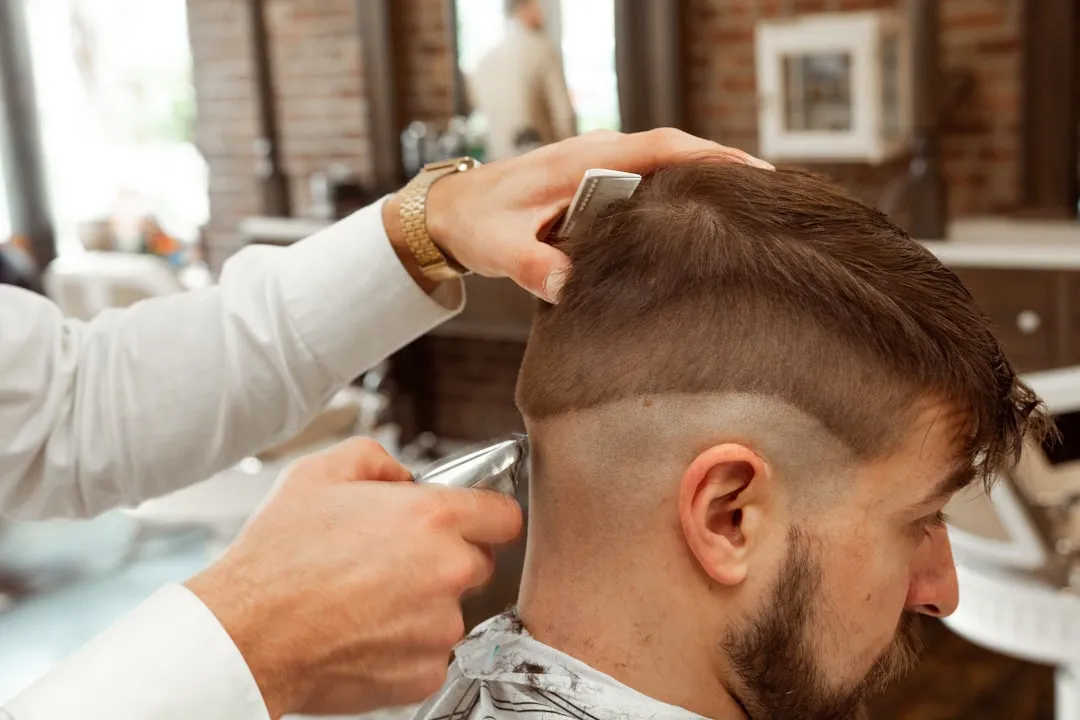
Artificial intelligence has revolutionized the way you choose a haircut. Instead of relying solely on intuition or generic suggestions from hairstylists, you can now use advanced technology to discover which style will harmonize perfectly with your face's characteristics.
This digital transformation is not just a passing trend; it represents a fundamental shift in the beauty and personal care industry. You gain confidence in your decision, save time, and best of all, get results that truly work for your unique appearance.
How AI Analyzes Your Face's Characteristics
Artificial intelligence technology uses sophisticated facial recognition algorithms to map the proportions, angles, and symmetries of your face. The system captures data such as forehead width, chin prominence, face length, and bone structure with precision that the human eye can hardly achieve. This three-dimensional analysis allows the AI to compare your characteristics with a database containing thousands of haircuts and their results on different face types.
When you upload a photo or position yourself in front of the camera, the algorithm identifies specific landmarks on your face and creates a detailed map. This map includes information about your jawline width, forehead height, cheekbone position, and even chin angle. With this data in hand, the AI can predict which haircut will create visual balance and highlight your best features.
The accuracy of this analysis goes far beyond what you could do by looking in the mirror. While you see your appearance as a whole, the AI deconstructs each facial element and evaluates how a new haircut interacts with each proportion. This means the system can identify whether you need a haircut that elongates your face, adds volume on the sides, or reduces the prominence of certain areas.
Common Mistakes You Avoid with AI
When you choose a haircut without concrete data, you make mistakes that cost both money and self-esteem. The most common error is copying a hairstyle you saw on a celebrity or in an online photo, without considering that the cut was made for that specific person's face shape. You sit in the salon or barbershop chair, show the photo, and weeks later realize the result doesn't work for you.
Another frequent mistake is ignoring your face structure and choosing a haircut based solely on current fashion trends. Social media amplifies this tendency, showing cuts that are trending but may not match your facial proportions. You end up investing in a style that doesn't enhance your features, leaving you less confident rather than happier with your appearance.
Many people also make the mistake of not considering hair texture and type when choosing a cut. Modern AI takes into account not only your face shape, but also your hair quality, density, and whether it's straight, wavy, or curly. This prevents you from choosing a cut that would technically work well on a face like yours, but would be impossible to maintain or style with your hair type.
The error of underestimating the importance of proportion is also common. You might think a short cut will look good on you because you like how it looks on others, but you forget that the proportion between your face length and hair length is completely different. The AI calculates these proportions automatically, avoiding this visual pitfall that leaves you frustrated.
The Advantages of Using Technology Before Visiting the Stylist
When you use AI to choose your cut before your appointment, you arrive at the professional with a clear vision and concrete data. This completely changes the quality of the conversation with your stylist or barber. Instead of vaguely describing what you want, you can show exactly which cut the AI recommended and explain why the technology thinks it will work for you.
Time savings are another significant benefit. You don't need to think for weeks about which cut to choose, searching for inspiration across various platforms and never reaching a clear decision. The AI provides recommendations in minutes, based on objective analysis rather than the stylist's personal preferences or fleeting trends.
Financially, you also gain. Haircuts that don't work for you cost money and time to fix afterward. When you choose a cut recommended by AI, the chances of being satisfied increase dramatically because the choice was based on specific data about your face. You save money on corrective cuts and hair therapy sessions trying to fix a wrong choice.
The confidence you gain from knowing your choice is based on scientific analysis is also immensely valuable. When you sit in the professional's chair, you already know the cut will work for you because the technology has already confirmed it. This security transforms the experience, leaving you relaxed and happy rather than anxious and hopeful.
What Face Shape Do You Have and Which Cuts Work Best
A square face is defined by a forehead, chin, and jawline with similar widths and marked angles. If you have a square face, haircuts that soften the angles work best, such as bangs that cover your forehead or lengths that reach your shoulders. The AI will recommend styles that add texture on the sides and avoid very short lengths on top, because this emphasizes a prominent jawline.
If your face is round, with wide cheekbones and a rounded chin, you benefit from cuts that visually elongate your face. The AI will suggest volume on top and lengths that fall straight, avoiding too much volume on the sides. Asymmetrical cuts also work well for round faces because they create the illusion of angle and definition.
An oval face is considered ideal because it works well with practically any haircut. If you have an oval face, the AI will focus on cuts that improve your best attributes and complement your personal style. The challenge here is smaller, but the AI still provides value by identifying which specific cut will make you feel more confident and beautiful.
For a rectangular or elongated face, you need to add volume on the sides and visually compress the height of your face. The AI recommends bangs, cuts with movement on the sides, and lengths that fall at jaw level. Avoiding very long or very short lengths is crucial because extremes emphasize your face's elongation.
A heart-shaped face has a wide forehead and a pointed chin. You benefit from cuts that distribute volume to your chin and soften your forehead. The AI will suggest side bangs, lengths that reach your chin to balance the upper and lower proportion, and textures that add volume in the lower part.
Step by Step: How to Use AI to Choose Your Haircut
The first step is to choose an AI platform that offers facial shape analysis. You look for apps or websites that use advanced facial recognition and have a large database of haircuts. Make sure the platform works well in English and has an intuitive interface, because you want an easy experience and not a complicated one.
Next, you take a photo of yourself in good lighting, ideally with your face straight to the camera and hair pulled back, so the AI can see your face well. The photo should be clear and without glasses or accessories that obstruct your face. If the platform allows, you can also provide information about your hair type, texture, and personal style that you like.

The AI then processes your photo and provides cut recommendations. You receive several options ranked by compatibility with your facial characteristics. Each recommendation typically comes with an explanation of why that cut will work for you, including details on how it will balance your proportions.
With the recommendations in hand, you examine each option and consider which would best combine with your personal style and hair type. You can save the two or three recommendations you like most and take that information to your stylist. This advance preparation transforms your appointment into a productive conversation based on concrete data.
Mistakes You Avoid When You Take the AI Recommendation to the Professional
A common mistake is taking the AI recommendation to your stylist inflexibly, without allowing the professional to share their expertise. The AI is excellent at analyzing proportions, but the stylist knows cutting techniques, maintenance, and adaptations that could further improve the result. You should use the AI recommendation as a starting point, not as a final mandate.
Another mistake is not communicating well what the AI recommended or showing poor quality photos that the AI used to make its analysis. If you're vague in your explanation, the stylist may not understand exactly what you want and end up doing something different. Bring your recommendations printed or on your phone, specifically point out the cuts the AI suggested, and discuss with the professional the reasons why the AI made those recommendations.
Many people also make the mistake of ignoring the stylist's suggestions when they differ from the AI recommendation. The stylist may think that a slightly different cut than recommended will work better based on how your hair naturally falls or its specific texture. Listen to the professional with an open mind, because they're seeing your hair in person and not just in a photo.
A critical mistake is not doing a maintenance test before fully committing. The AI may recommend a cut that requires daily styling or frequent maintenance, and you may not have the time or willingness for that. Before making the final cut, talk to your stylist about how to maintain the cut at home and whether you can realistically dedicate time to it.
You also make a mistake if you don't consider your daily routine when choosing a cut. The AI analyzes your face, but you need to think about how much time you spend getting ready. A cut that will look beautiful but requires you to style it for half an hour every morning may not be practical for your life. Combine the AI analysis with realistic knowledge of your daily routine.
Other Technologies That Complement AI Analysis for Haircuts
Beyond facial shape analysis, there are technologies that help you simulate the result before cutting. Augmented reality filters let you see how different cuts would look on you in real time. You point your phone's camera at yourself and the technology overlays different hairstyles, showing you how each one looks on your face. This works well alongside the AI analysis because you not only get a recommendation but can also visualize the result.
Some platforms also use data about your personal tastes. If you use social media, the AI can analyze what types of cuts you usually save or like and combine that with your facial shape analysis. This creates even more personalized recommendations because it considers not only what is objectively good for you, but also what you subjectively like.
Hair color analysis is another complementary technology. Some AI platforms evaluate your skin tone and suggest hair colors that will harmonize with the recommended cut. This is valuable because a cut works much better when accompanied by the right color. You can visualize not just the shape, but the complete new hair package.
How to Avoid Disappointment When AI Recommends Something Very Different From What You Expected
It's common for the AI to recommend a cut you hadn't initially considered. You might have imagined keeping long hair because you like how it looks in photos, but the AI recommends a short cut because its data shows it will better balance your face. When this happens, you may feel disappointed or distrustful of the technology.
The first step in dealing with this situation is to understand why the recommendation was made. Try to read the explanation that the platform provides for why that cut was suggested. Often, you'll discover that the AI is seeing something you weren't, like an imbalance that corrects when you change your hair length. This education about your own appearance is valuable in itself.
You can also do a mental test or even a physical test before committing. If the AI recommends something very different, you can ask your stylist to do a test first with an extension or simulation. This allows you to see how it looks before permanently cutting. This approach reduces risk and helps you gain confidence in the AI recommendation.
Another option is to use the AI as a starting point and ask your stylist for an adapted version. If the AI recommends a very short cut and you're used to long hair, the professional can make an intermediate version that keeps you more comfortable while still applying the principles the AI identified. This approach balances scientific recommendation with personal preference.
Also remember that beauty trends change and your taste evolves. Sometimes the AI recommends something you appreciate on paper, but that doesn't feel good psychologically. This is valid and you shouldn't force a cut just because the technology recommended it. Use the AI as an information tool, not as a substitute for your own judgment and personal comfort.
Why the AI Approach Works Better Than Just Asking for Opinions
When you ask friends or people online for opinions about which cut to choose, you receive recommendations based on their personal taste, not objective analysis. Your friend may like short hair and recommend a short cut for you, even though that may not be the best choice for your facial proportions. The AI eliminates this personal bias and provides recommendations based on data.
Stylists can also have unconscious biases. Some prefer working with short hair, others with length. Some are used to doing certain styles and may recommend what they master best, not necessarily what's best for you. When you arrive with an AI recommendation, you force the professional to think beyond their usual habits and focus on what will really help you.
The advantage of AI is its ability to process thousands of images and data. The system has already seen your face shape in hundreds or thousands of other clients and knows exactly how different cuts work with proportions similar to yours. Your stylist, however experienced, has only worked with the clients they've had throughout their career, a much smaller number to establish such reliable patterns.
You also eliminate social awkwardness by using AI. Perhaps you feel you can't disagree with a professional's or close friend's recommendation, even if you disagree internally. With AI, the recommendation is neutral and you can freely consider it without complicated social dynamics complicating your decision.
Data documentation is also a factor. The AI leaves a record of why it recommended that specific cut. If the result isn't what you expected, you can understand exactly what went wrong and learn for next time. With verbal recommendations, you don't have this clear record and you become confused about what you really expected versus what was recommended.