
Introduction: The Present is the Future
Smartphones have long ceased to be simple communication devices. In recent years, we have witnessed a radical transformation in how these devices work and shape our daily lives. What once seemed like science fiction is now a tangible reality in our hands.
We are at a critical moment in the history of mobile technology. The innovations arriving on the market in the coming months are not just incremental updates, but fundamental changes in how we interact with technology. Integrated artificial intelligence, revolutionary displays, professional-level photographic capabilities, and innovative design are completely redefining what we expect from a smartphone.
This article explores the most important technological trends already shaping the future of smartphones, analyzing how these innovations work, why they matter, and how you can leverage these technologies today.
The Artificial Intelligence Revolution in Smartphones
Artificial intelligence is no longer a futuristic feature reserved only for supercomputers. It now resides in your pocket, integrated into the processors of the most modern smartphones. This is one of the most significant changes of our time.
Major manufacturers like Apple, Google, and Qualcomm are investing billions in specialized chips to process AI locally. Google's Tensor in the Pixel 8, for example, was specifically designed to run AI models directly on the phone, without sending your data to remote servers. This brings immediate benefits: greater speed, enhanced privacy, and independence from internet connectivity.
The practical applications of this AI are already visible. Real-time translation now works seamlessly between languages, with increasing accuracy. The Google Translate app can translate captured text instantly, while conversations are translated in seconds. AI-based photo editing allows you to remove unwanted objects, restore blurry faces, and improve quality with a tap.
The contextual intelligent assistant represents another crucial advance. Modern assistants now understand the context of your questions, learn your usage patterns, and anticipate your needs. If you receive a two-factor authentication code, the phone recognizes it automatically and suggests it. If you ask for information about a restaurant mentioned in an email, the assistant connects these dots without you specifying.
Looking forward, AI on smartphones is expected to evolve even further. Large language models (LLMs) will be running completely on the device, enabling more sophisticated conversations without any cloud dependency. Features like AI agents that can manage tasks automatically, make calls on your behalf, and coordinate your schedule will make the smartphone truly personal in the most literal sense.
Foldable Displays: From Concept to Practical Reality
Foldable smartphones are no longer a laboratory experiment. Today, they are viable devices used daily by millions of people. Samsung, Google, OnePlus, and other manufacturers already offer commercial models, and this technology is becoming mainstream faster than expected.
There are two main types of foldable smartphones: the flip type, which folds horizontally like a shell (similar to the old Samsung Galaxy Z Flip), and the tablet type, which opens like a book to reveal a larger screen (like the Samsung Galaxy Z Fold). Each has distinct uses.
Flip devices are compact, fit perfectly in your pocket, and offer the experience of having a 6.7-inch screen when unfolded, while maintaining the size of a pager when folded. They are ideal for those who value portability. Tablet models, on the other hand, offer a screen up to 7.6 inches when open, functioning almost like a portable tablet.
Historical challenges with hinges are being overcome. New generations use more resilient materials and more sophisticated mechanisms, with improved dust resistance. Durability now competes with traditional smartphones in terms of longevity. Batteries have been optimized to provide battery life comparable to rigid models, and more efficient processors reduce power consumption.
Software has also evolved. Operating systems now fully leverage the foldable screen, offering optimized multitasking layouts. You can watch a video on one side while typing an email on the other. Apps can use double the space when the device is open, creating completely new experiences.
In the coming years, prices are expected to drop significantly. Today, a foldable smartphone costs between $700 and $1,400, but as the technology matures and production scales, these numbers will decrease. Within two to three years, mid-range foldable smartphones are expected to cost half their current price.
Professional-Level Photography Cameras
The smartphone camera has completely transformed how we capture the world. What started as a secondary feature is now the main reason many people buy their phones. The evolution here has been exponential.
Recent innovations include much larger sensors that capture more light, dramatically improving photography in low-light environments. The iPhone 15 Pro Max and Samsung Galaxy S24 Ultra have larger pixel sensors, allowing extraordinary detail even in challenging lighting conditions. Enhanced optical zoom technology now offers up to 10x zoom without visible loss of quality, closely approaching the capabilities of traditional professional cameras.
Computational image processing has completely changed the game. AI algorithms can now process multiple exposures in fractions of a second, combining the best of each. HDR (High Dynamic Range) is so advanced that scenes with large variations in brightness are captured with impeccable detail in both shadows and highlights. Night mode can create professional photos in almost completely dark environments.
Video recording has also reached new heights. It is now possible to capture 8K video with cinematic image stabilization, allowing you to create production-quality content directly from your pocket. Electronic gimbal stabilization technology makes videos shot while walking as smooth as something filmed with professional equipment.
The practical applications are endless. Real estate professionals use smartphones to create virtual property tours. Content creators make viral videos entirely on social networks using only their phones. Journalists cover global events with television quality using smartphones. The barrier between amateur and professional has virtually disappeared.
The future brings cameras with even larger sensors, even more versatile focal lengths, and artificial intelligence that will understand artistic intent to automatically activate the best modes for a specific scene. The smartphone will anticipate that you are photographing a sunset and automatically adjust settings to capture it as a professional would.
Battery, Charging, and Autonomy: Challenges Resolved
Battery autonomy has always been the Achilles heel of smartphones. While processors become more powerful and screens brighter, the need to recharge daily persists. However, recent advances are completely changing this narrative.
Solid-state battery technology is getting very close to commercial applications. Unlike conventional batteries that use a liquid electrolyte, solid-state batteries use a solid material, allowing greater energy density in a smaller format. First commercial versions are expected to hit the market in 2025, offering up to 50% more capacity in the same space.
Fast charging has also matured dramatically. Flagship phones now offer 0% to 50% charging in less than 20 minutes. The Samsung Galaxy S24 Ultra supports 45W charging, while some premium Android models reach 120W. This is so fast that the bottleneck is now more frequently the quality of the charger and cable than the phone's ability.
Wireless charging has also evolved. It now offers speeds comparable to wired charging on many devices. Several vendors offer pads and stands that charge while you use the phone. Reverse wireless charging allows your smartphone to charge other devices, like earbuds or even another phone.
Intelligent power management by specialized processors means the phone learns your usage patterns and optimizes battery life accordingly. If you rarely use certain apps, they are kept in low-power mode. If you always watch videos at night, the device learns this and optimizes graphics during that period.
In the coming years, moderate use of a smartphone is expected to offer battery life of up to three days. For light use, a full week of battery life may be realistic with solid-state batteries and software optimizations.
5G Connectivity and Beyond: The Future of Networks
When 5G was launched, its promises seemed exaggerated. However, as infrastructure was implemented, reality proved to be even more transformative. 5G offers speeds up to 10 times faster than 4G, ultra-low latency, and the ability to connect billions of devices simultaneously.
The practical applications are already visible. In regions with complete 5G coverage, you can download a two-hour 4K movie in less than 40 seconds. Multiplayer games achieve such low latency that the game feels instant. High-resolution video calls occur without any noticeable delay. Real-time streaming of augmented and virtual reality becomes viable.
However, 5G is just the beginning. 5G Advanced technology (also called 5.5G) is already being tested and offers significant improvements in power efficiency, allowing more devices to connect simultaneously and with greater reliability. 6G is being actively researched, with first tests beginning in 2024. 6G is expected to offer microsecond latencies and terabit-per-second speeds.
The implications for smartphones are profound. With these ultra-fast, low-latency connections, much of the heavy processing can be delegated to remote servers, allowing phones to remain thinner, lighter, and with better battery life. Console-quality games can stream. Professional video editing can happen in real-time in the cloud.
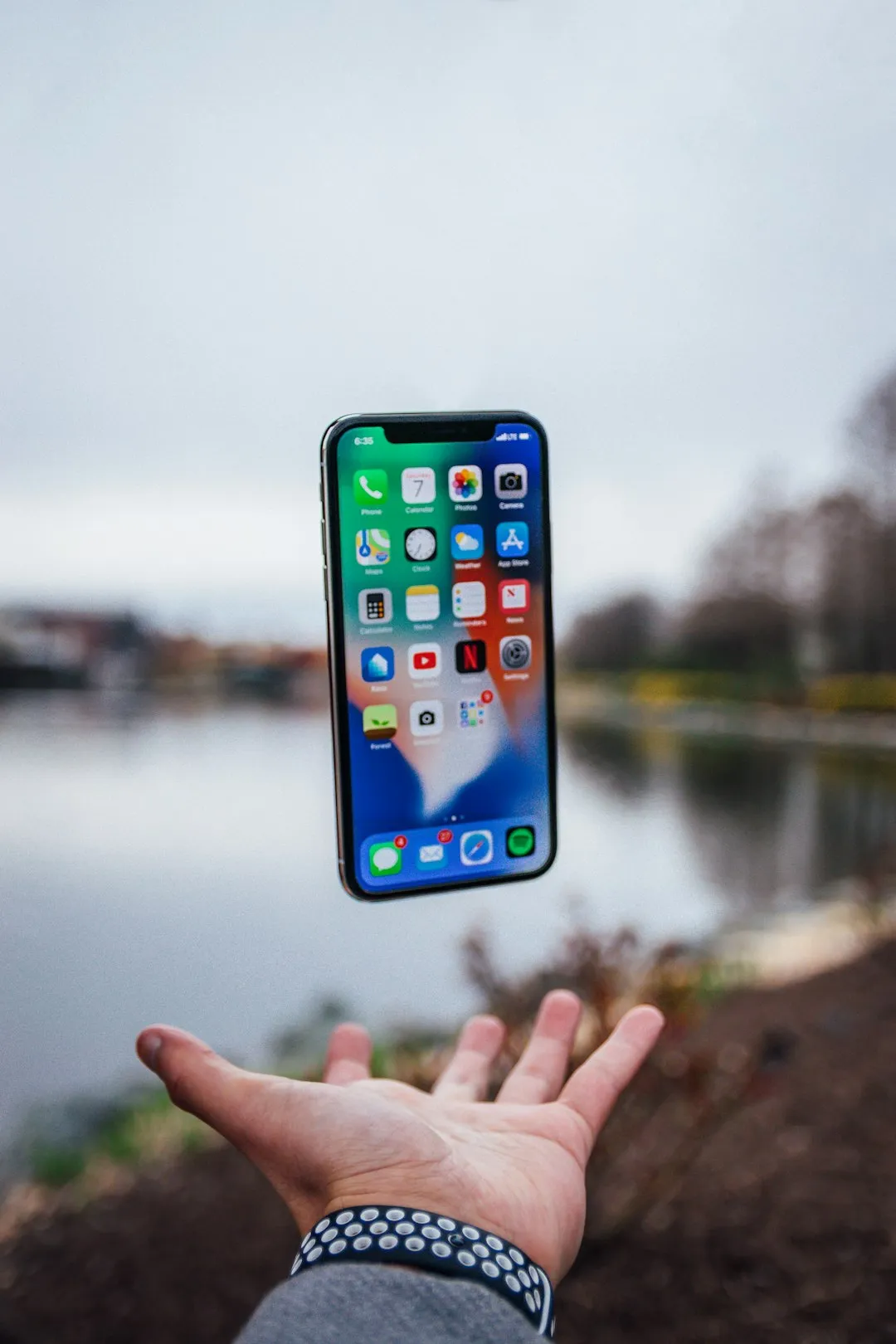
Beyond cellular networks, WiFi technology also evolves. WiFi 6E and WiFi 7 offer speeds rivaling 5G in indoor environments, with greater stability. Bluetooth also maintains its importance, with newer versions offering greater range and energy efficiency.
Innovative Design and Materials
Smartphone design has evolved beyond simple aesthetics. Modern smartphones use materials that seem to have come from science fiction laboratories. Special glass with scratch resistance, durable titanium, and aerospace-grade aluminum have created phones that are simultaneously stronger and lighter than their predecessors.
Wear resistance has improved dramatically. Modern glasses can resist falls from greater heights without breaking. The anti-reflective coating on one corner of the iPhone 15 Pro reduces unwanted reflections by half. Anti-fingerprint materials keep the phone clean for much longer.
Beyond durability, design now prioritizes sustainability. Manufacturers use recycled materials, reduce plastic use, and create modular phones that can be repaired more easily. An iPhone 15 can be virtually disassembled and reassembled by a technician, reducing electronic waste.
Smaller but impactful innovations include enhanced haptic feedback with more sophisticated haptic motors that can simulate different textures. Pressing a virtual button now provides feedback almost indistinguishable from pressing a physical button. The arrangement of elements on the back of the phone has also been optimized, with camera modules integrated more elegantly.
Colors and finishes also evolve. New coloring techniques allow metallic tones that change as the viewing angle changes. Some models now offer texture patterns that improve grip without adding apparent bulk.
Security and Privacy: Complete User Control
As smartphones store increasingly more personal data, security has become an absolute priority. Advances in biometrics and encryption ensure your data is protected at a level that some governments take years to achieve in their systems.
Biometric scanners now include sophisticated 3D facial recognition that works even in low light and can detect attacks with photos or masks. Ultrasonic fingerprint readers integrated into the screen can capture fingerprints with much greater detail than older technologies.
End-to-end encryption is becoming standard not only in messaging apps, but in virtually all communication on the smartphone. Your emails, text messages, and voice calls are encrypted so that no outside entity, not even your phone carrier, can intercept them.
Dedicated security processors run much of the sensitive operations in isolation from the main processor. This means that even if someone gains access to the main operating system, they cannot access biometric data or encryption keys. It's like having a safe inside a safe.
Recommended practices for maximum security include: using biometrics whenever possible, enabling two-factor authentication on important accounts, keeping the operating system updated, using a VPN on public wifi networks, and disabling location services for apps that don't need them. Modern privacy settings allow granular control over what data each app can access.
Integrated Augmented and Virtual Reality
Augmented reality has transcended novelty apps. Modern smartphones now have sensors and dedicated processing to create AR experiences so convincing that it's hard to distinguish them from the real world in certain contexts.
Practical AR applications already transform how we do everyday things. The Measure app transforms your smartphone into a virtual tape measure, measuring distances and dimensions just by pointing the camera. The Google Lens app can identify plants, animals, objects, and even dishes in restaurants just by taking a photo. The IKEA Place app lets you visualize furniture in your room before buying.
Augmented reality filters on social networks have evolved to be almost indistinguishable from professional image manipulation. People can create cinematic visual effects in real-time during live videos, transforming how content creators produce material.
Virtual reality is also gaining traction. Smartphones can be used with cheap VR headsets to create immersive experiences. You can explore museums, visit real estate properties, participate in virtual meetings, and even play immersively all with your smartphone as the screen.
The future brings smart glasses that connect to smartphones, creating information layers overlaid on reality. You will be able to see information about restaurants while walking down the street, real-time translation of foreign street signs, and navigation with arrows appearing in the world itself.
Modularity and Repairability
For decades, smartphones were sealed boxes that could only be fixed by authorized technicians. This reality is changing rapidly. New models emphasize repairability, allowing users to replace components relatively easily.
The iPhone 15 Pro was specifically designed to facilitate repairs. The battery can be removed without destroying the casing. The camera can be replaced. The back glass can be replaced without removing the entire chassis. This reduces repair costs and extends the device's lifespan.
Manufacturers now offer consumer repair kits with all the tools necessary to replace common parts. This democratizes the right to repair, preventing users from being held hostage by authorized service centers. The savings for consumers are significant: replacing battery at an authorized center often costs $60 to $100, while a DIY kit costs less than $10.
Beyond repair, there is a growing trend toward complete modularity. Imagine a smartphone where you can upgrade just the processor while keeping the camera, screen, and battery. This is being experimented with in concept models and could be available in less than five years.
Sustainability and Responsible Manufacturing
The technology industry has finally acknowledged its environmental impact. Modern smartphones are increasingly manufactured responsibly, considering the complete product lifecycle from ore mining to final disposal.
Recycled materials now make up significant parts of smartphones. The iPhone 15 uses completely recycled gold and copper. Samsung is gradually eliminating virgin plastic use in its packaging. Many manufacturers have set ambitious targets to achieve carbon neutrality across the entire supply chain.
Product longevity is also a primary consideration. By offering software updates for seven to ten years, manufacturers ensure the phone remains useful and secure much longer. This reduces the need for frequent upgrades and decreases the amount of electronics discarded annually.
Old device recycling programs offer credits and discounts when you return your old phone. These devices are disassembled and their materials recovered for use in new products. Rarely does an entire smartphone end up in a landfill when properly recycled.
Transparency in the supply chain also increases. Manufacturers publish reports on factory working conditions, responsible mining, and compliance with environmental standards. Pressure from conscious consumers is forcing industry changes that seemed impossible just five years ago.
Frequently Asked Questions
When will smartphones with integrated AI become affordable for most people?
Integrated AI is already available in mid-range to premium smartphones in 2024. Google offers AI processing in its Pixel 8a, which costs less than $300. Apple integrates AI in all iPhone 15s. By 2025, even entry-level models are expected to offer basic AI features, with continuous price reduction.
Are foldable smartphones as durable as traditional phones?
The durability of foldables has improved significantly. The latest generations offer dust and water resistance comparable to rigid models. The hinges have been reinforced and can withstand opening and closing hundreds of thousands of times. The only real difference is that the foldable screen is slightly more prone to damage if you scratch it with pointed objects, the same way any smartphone screen is.
Is it worth buying a 5G smartphone now or should I wait for 6G?
5G offers measurable practical benefits today. If you live in an area with 5G coverage and frequently stream video, video call, or download large files, the benefits are immediate. However, 6G is still in the research and testing phase. It won't be commercially available until at least 2028-2030. If your current smartphone works well, you can wait. If you're planning a new purchase, 5G is worth it.
Which smartphone has the most professional camera available today?
The iPhone 15 Pro Max and Samsung Galaxy S24 Ultra offer the best smartphone cameras available. iPhone excels in color processing and video, while Samsung offers greater zoom without loss of quality. For complete professional photography, the Xiaomi 14 Ultra also deserves consideration. The choice depends on your priorities: iPhone for consistency, Samsung for zoom versatility, Xiaomi for maximum aperture.
How do I protect my privacy data on a modern smartphone?
Use biometrics to unlock instead of passwords. Enable two-factor authentication on important accounts. Regularly review each app's permissions in settings. Disable continuous location tracking. Use VPN on public networks. Update the operating system as soon as security updates are available. Consider using privacy-focused browsers like Firefox. Limit the amount of personal data you share with apps.